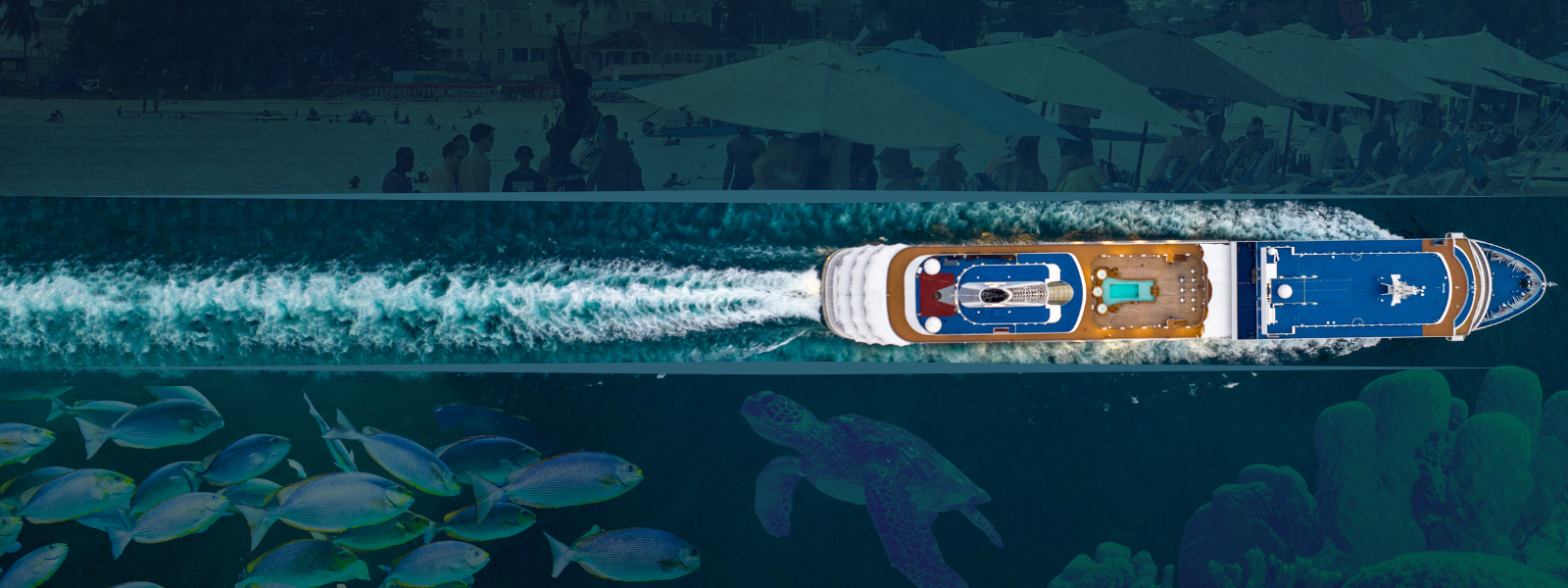
Cruise passengers wait anxiously to disembark. When the doors finally open, they scurry down the gangway into waiting taxis and buses, eager to see what Barbados has to offer.
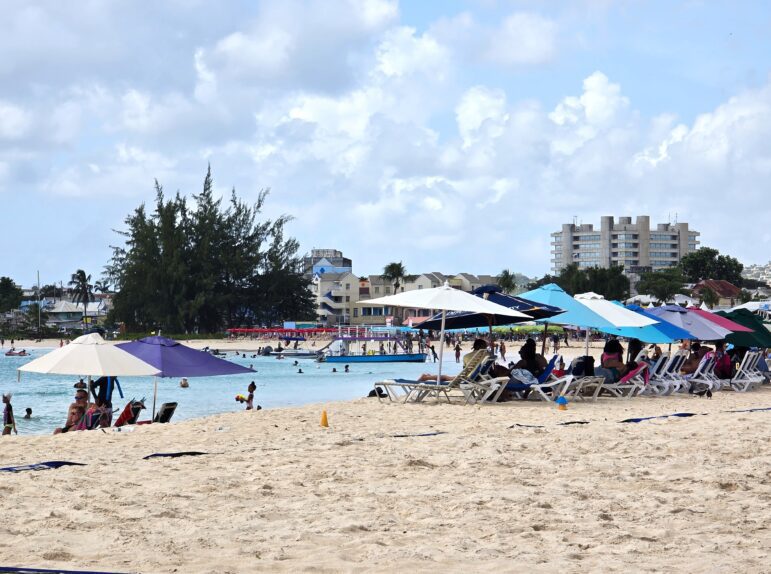
The most coveted destination is the beach, where the dreams of some vacationers come true as they experience “advertised” paradise.
This paradise is part of the larger marine space, which Barbados agreed to protect as a signatory to the United Nations’ Convention on Biological Diversity and later, the Kunming–Montreal Global Biodiversity Framework (GBF) in December 2022. The framework outlines 23 target action goals, with Target 3 focusing on 30% marine protection by 2030.
Cementing its dedication to the 30×30 goal, Barbados entered into a debt-for-nature swap, legally tying its financial recovery to its environmental commitment.
Despite these highly visible international stances and the Marine Areas (Preservation and Enhancement) Act, Cap 392; the Coastal Zone Management Act, Cap 394; and the Marine Pollution Control Act, Cap 392A Acts, Barbados protects less than 1% of its marine space through its sole legally designated Marine Protected Area, the Barbados Marine Reserve. This reserve, located at Folkestone on the west coast, is protected by law and divided into four zones for research, recreation, and water sports.
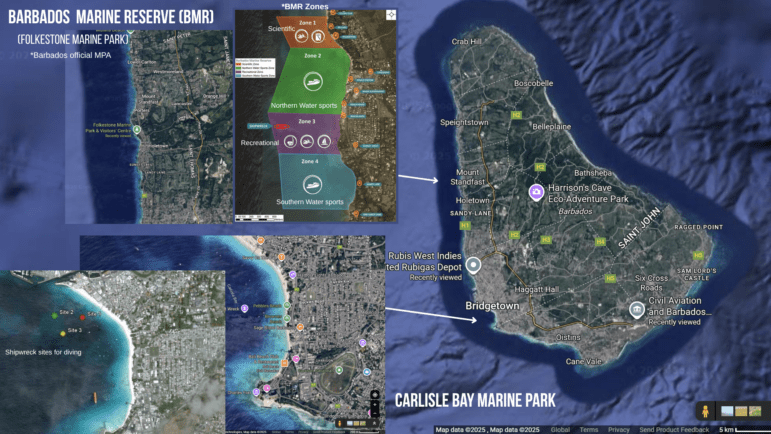
In contrast, Carlisle Bay Marine Park, though actively monitored by the Coastal Zone Management Unit (CZMU), has no legislative protection, leaving management largely voluntary.
Across both sites, limited enforcement capacity means activities often remain multi-use, falling short of the “high-protection” thresholds recognised under international Blue Parks standards.
Also, to reach its 30×30 goal, Barbados must look beyond the reefs to deeper waters, the same channels used by massive cruise ships. It’s a convergence that makes protection and enforcement far more complicated.
For a small island state whose economy, food security, and climate resilience are tied to the ocean, meeting the 30×30 target is a matter of national survival. But the ocean is also the foundation of Barbados’ tourism economy, particularly its growing cruise sector, which is projected to see over 400 ship calls and 800,000 passengers in the 2026 winter season.
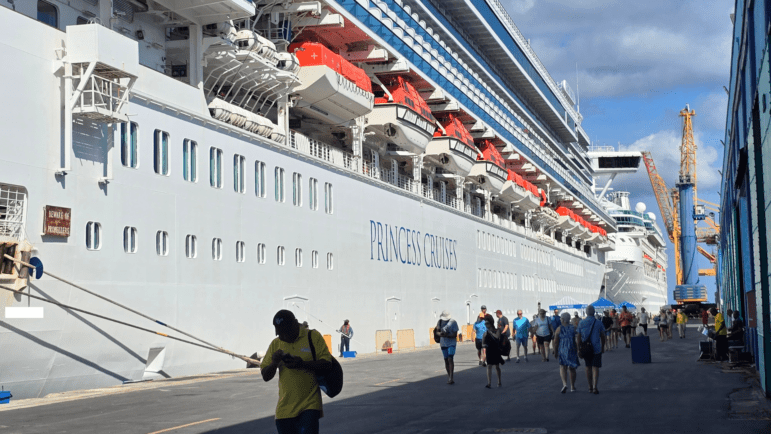
During the 2023/2024 cruise season, cruise passengers generated “a total of $83.5 million USD in cruise tourism expenditures in Barbados,” according to the Economic Contribution of Cruise Tourism To The Destination Economies compiled by the Florida Caribbean Cruise Association (FCCA).
“We have been told by the cruise executives that the booking trend from last season will continue into this coming winter season, with the cruise ships reporting bookings of 100 per cent occupancy”, the tourism minister, Ian Gooding-Edghill, stated.
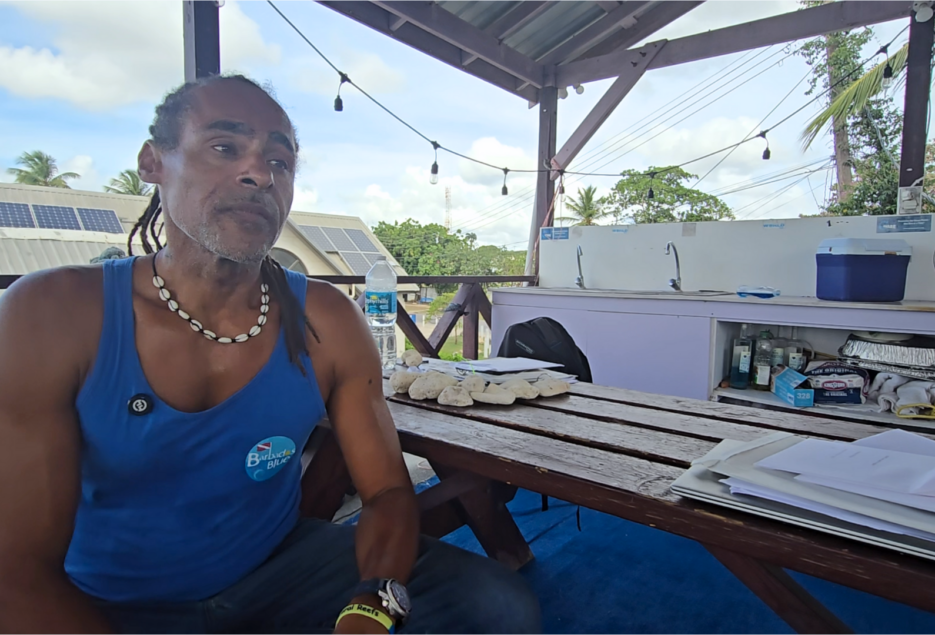
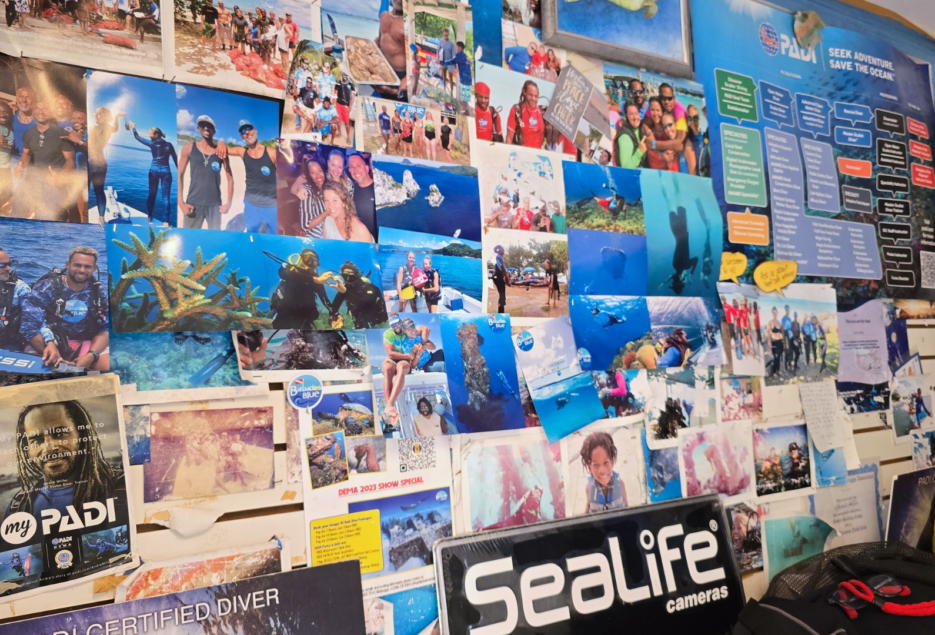
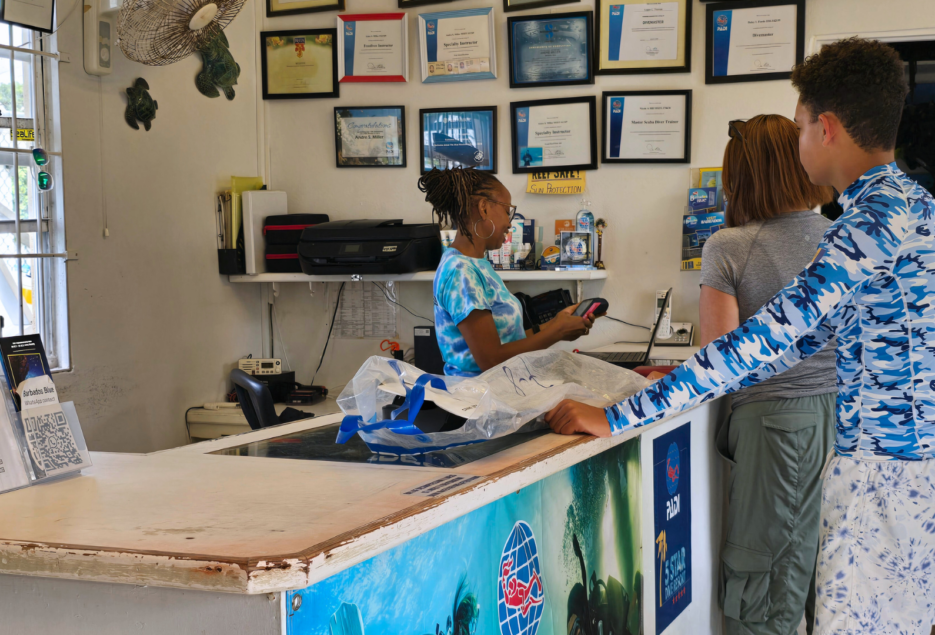
Dive instructor, marine biologist and conservationist from Barbados Blue, Andre Miller, knows all too well the dilemma Barbados faces. He said his business and way of life rely on both tourism and a thriving marine environment.
“It is our vested interest to protect what’s in that marine park. So the economic benefits and ecological benefits are the same. If we don’t have a healthy marine environment, those cruise ships don’t want to come to Barbados anymore,” Miller said, staring across Carlisle Bay.
 Barbados Blue Dive Shop, located by the Carlisle Bay Marine Park. The dive centre is at the heart of efforts to promote marine conservation while catering to the growing number of tourists drawn to Barbados’ underwater attractions. Photo credit: Esther Jones

Swapping Debt for Marine Conservation and Marine Spatial Planning
In light of these concerns, Barbados is increasing its MPAs.
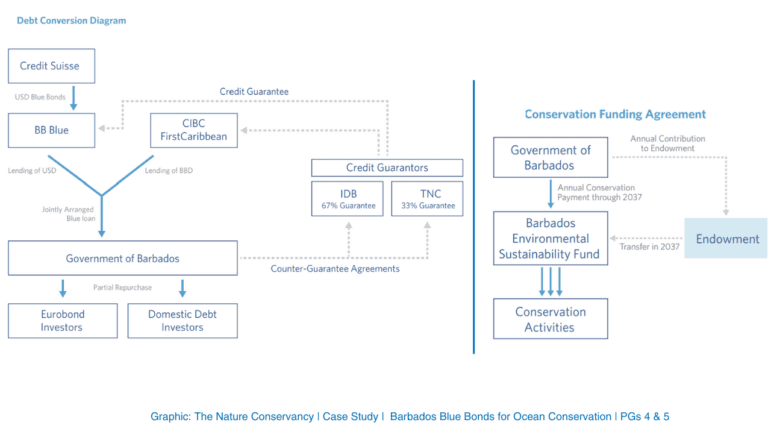
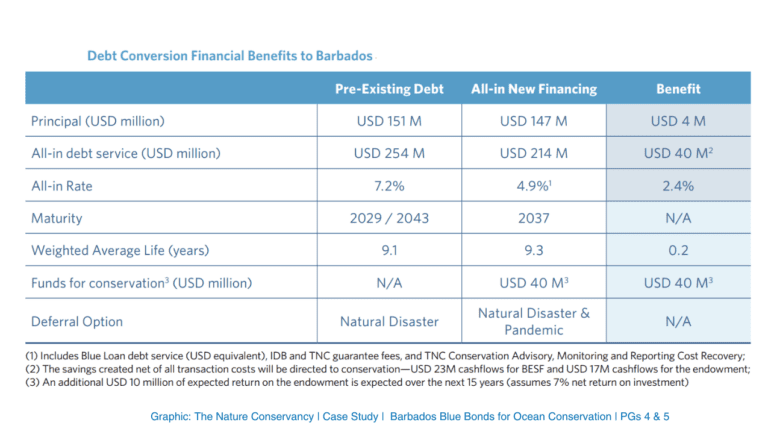
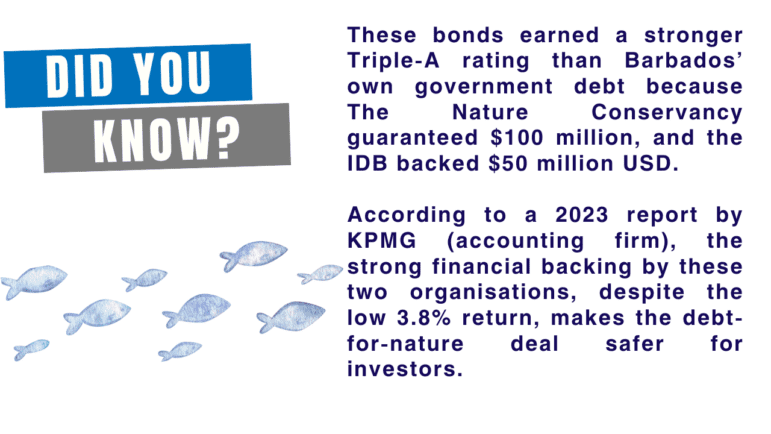
In 2022, the Government of Barbados signed an agreement with The Nature Conservancy (TNC) and the Inter-American Development Bank to refinance $150 million USD of its sovereign debt under a lower-interest scheme funded through Blue Bonds.

Over the course of the 15-year legally binding agreement, Barbados expects to save between $50 and $60 million USD, which will be transferred to the Barbados Environmental Sustainability Fund (BESF) used to meet Barbados’ 30×30 goal.
Barbados is now in the infancy stage of the debt-for-nature swap agreement. “When you look at a country like Barbados, our marine space is 424 times the size of our terrestrial space. We need to balance all of the different needs of us as a country,” explains Ricardo Marshall, Director of the Roofs to Reefs Programme.
“To effectively protect your marine space, you need to know what is in it. One of the key aspirational goals under the debt-for-nature swap is to provide 30% coverage for our marine protected areas by 2030 and beyond,” Marshall further explained.
The development of the Barbados Marine Spatial Plan (BMSP), led by the newly established Marine Spatial Plan Project unit, fulfilled the first milestone of the marine agreement.
“We keep on gathering information about how the ecosystems are working, and change the plan to suit our needs, but then we have to make sure that we monitor all the activities within the marine and the coastal area,” Marine Spatial Plan Project Director, Allison Wiggins, pointed out on the Brass Tacks radio call-in programme.
“The concept seeks to ensure that all Barbadians from all walks of life have input into this process, which involves all of our stakeholders, from fisheries to energy to tourism,” she continued.
On the same radio programme, Dr Leo Brewster, Director of the Coastal Zone Management Unit (CZMU), emphasised the process of achieving marine protection.
“It is a work in progress. We have to complete the plan within 5 years of the 2022 signing. Right now, we’re on target to finish by 2027,” the CZMU director said.
Beyond that target, Ms Wiggins stressed that it is only the first step. “We have about 5 – 7 years to do the plan, but then after that, we have to make sure that we monitor all the activities within the marine and the coastal area. So it’s an iterative process that continues to go on for a long time,” she said.
Cruise Boom VS Ocean Protection
Carving up this piece of marine pie is where the puzzle lies, which Barbados Blue’s Miller knows well. He understands what happens when marine reserves reach capacity. He only has to look to Carlisle Bay, where he now operates his business and previously worked for the CZMU. Back then, he was part of the team that implemented protective measures for the bay, although it was not part of the official Barbados Marine Reserve.
“The small area in the Carlisle Bay Marine Park, where the vast majority of cruise ship snorkelers and scuba divers go, was the same size in 2000 when we set the initial boundaries. However, over those 25 years, the Barbados Port and the number and size of cruise ships have increased exponentially. We totally exceed the carrying capacity of the Carlisle Bay Marine Park daily,” he expressed, referring to the high number of cruise ship passengers who now come to the park.
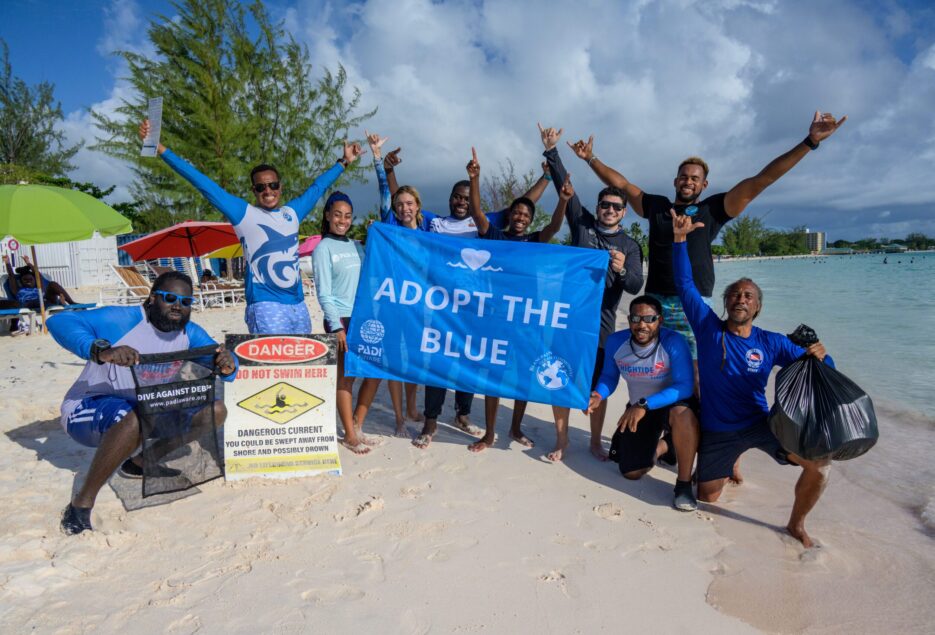
Nesaba Browne is an environmental biologist, a dive master, and a regional coordinator for the PADI AWARE Foundation. Browne, like Miller, said she notices “there’s a lot more human traffic in those areas when a cruise ship comes in”.
- Nesaba Browne leading dive professionals in training to assist them in rapidly assessing reef damage and health following Hurricane Beryl using PADI AWARE's Habitat Impact Survey. (Photo by Logan Thomas)

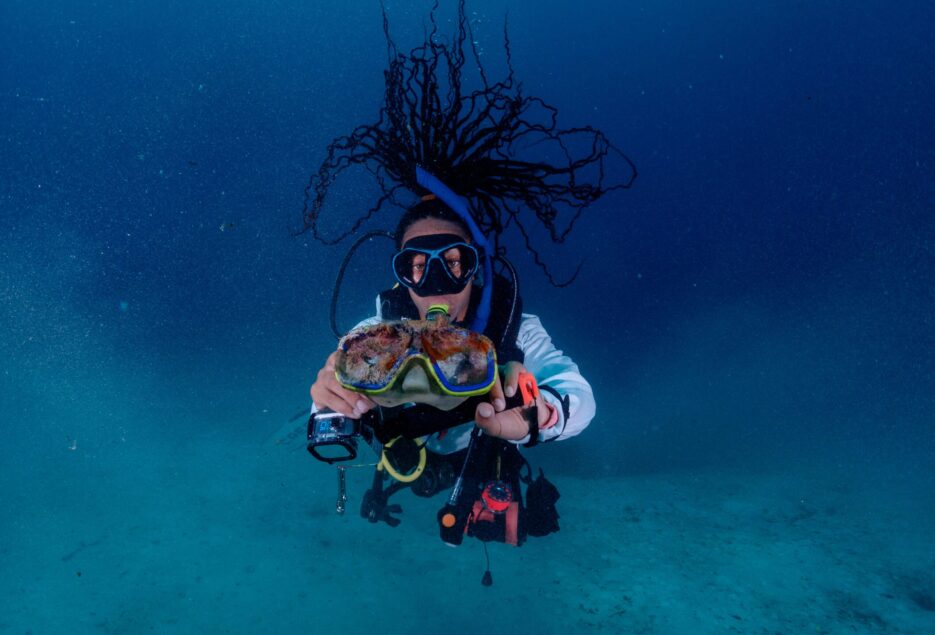
Robert Bourne, who is also a dive instructor and tour operator, agrees.
“[Cruise ships] are bringing in a lot of tourists, which is good for the economy. About 500 cruise passengers take boat tours; let’s say three-quarters get into the water, and three-quarters of them have sunscreen on. Sometimes you can actually see a layer of film on the water,” he said.
Beyond the overcrowding, management of Barbados’ two main marine areas is split between agencies: the legally protected Barbados Marine Reserve at Folkestone, overseen by the National Conservation Commission, and the voluntarily managed Carlisle Bay Marine Park, monitored by the Coastal Zone Management Unit. Yet despite their different legal statuses, enforcement remains fragmented. Neither agency has the power to make arrests. Instead, that duty rests largely with the Marine Police and, to a lesser degree, the Barbados Coast Guard, creating a clear gap in everyday enforcement.
“[The Government] doesn’t have the enforcement capacity now, and especially if you’re going to add offshore and even more inshore areas. It’s fine to set up an open-ocean protected area, but it costs a lot of money to police it. You have to have a big boat that can go out there and arrest people; otherwise, nobody’s going to pay it any attention. And it will be just paper,” warned Robin Mahon, Professor Emeritus in Marine Affairs at the University of the West Indies (UWI).
His warning cuts to the heart of Barbados’ 30×30 challenge. Establishing marine protected areas is a journey that requires years of planning, consultation, and political will. Yet, once declared, enforcing them becomes an even greater hurdle. As zones extend into deeper waters, the costs and logistics of policing them rise sharply. Cruise ships, for instance, may soon have to navigate through or around newly established offshore protected areas, further complicating enforcement.
An environmental watchdog group has already raised red flags about the industry’s record. Friends of the Earth’s annual Cruise Ship Report Card, produced by a global network of more than 70 environmental organisations, tracks how major cruise lines manage sewage, air pollution, water quality, and transparency.
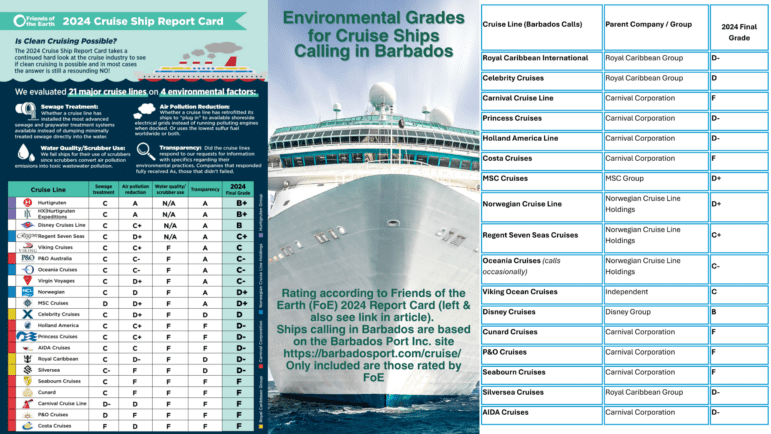
Its latest findings show several lines calling in Barbados still earn failing grades, raising concerns about how increased marine traffic could affect future deep-water MPA designation.
“When you look at the bathymetry [depth of water] of Barbados, when you look at our hydrogeology as well, Barbados drops off very quickly, so the majority of our waters are extremely deep waters,” the Roofs to Reefs director, Ricardo Marshall, explained.
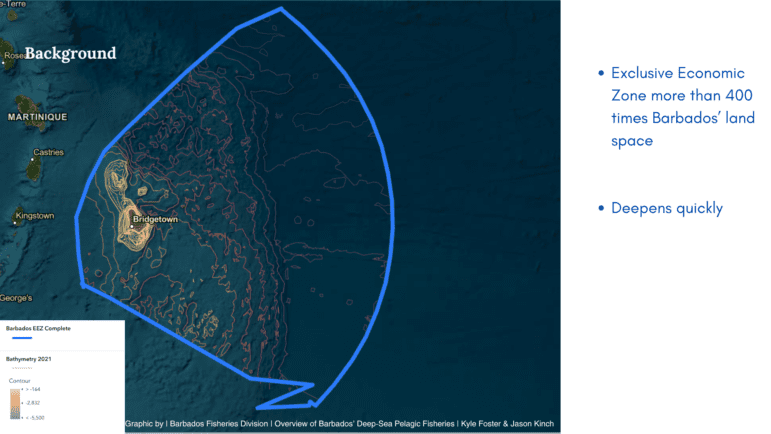
If pollution, anchoring, or wastewater discharges from cruise vessels degrade those deeper offshore areas, it could undermine the ecological value of the spaces Barbados must now safeguard under its Blue Bonds agreement.
That concern is not theoretical. During the COVID-19 pandemic shutdowns, cruise ships were allowed to take harbour in Barbados.
A subsequent study by the Centre for Resource Management and Environmental Studies (CERMES) at the University of the West Indies, Assessing the Anchoring Impacts of Cruise Ships in Barbados during the COVID-19 Pandemic (2020), found that “taking the overlap of all anchoring polygons into consideration, the maximum total cumulative area of potential habitat damage was estimated to be 1.8 km² for the 132 cruise ship anchoring events.” The physical damage to the reef was both directly observed through diving expeditions and estimated using models.
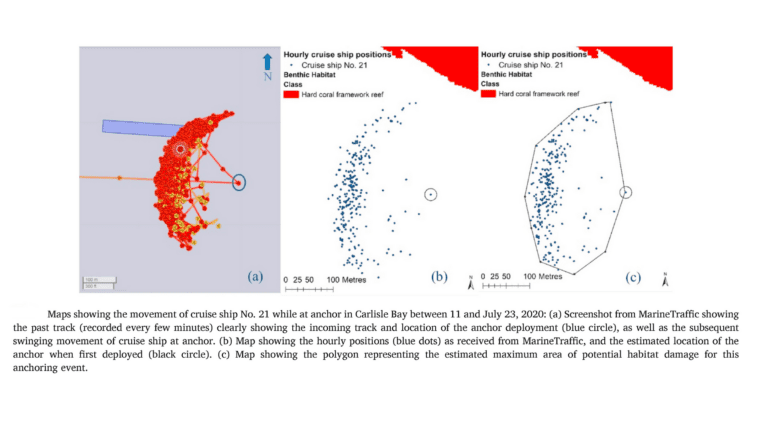
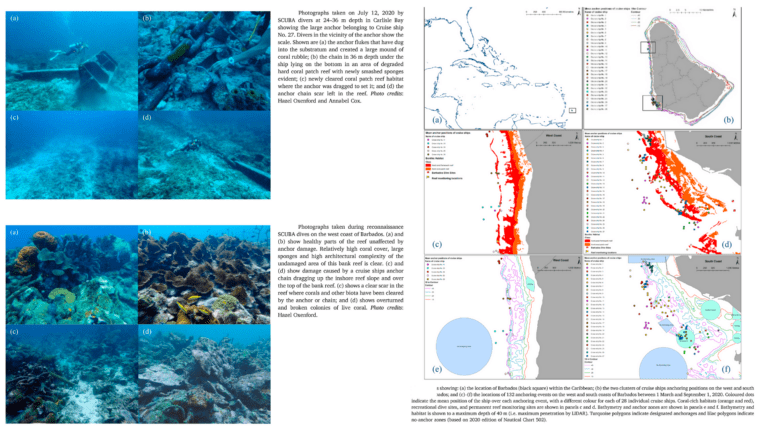
The report further noted that “monetary compensation is highly unlikely to adequately replace the ecosystem services lost over the long-term”. Yet, to date, no one has been held legally accountable, which the report surmises “was likely a combination of the difficulty in assigning blame to cruise ships that were given permission to anchor, and fear of losing favour with an industry seen as critical.”

Following the CERMES report in June of 2021, on the ‘Down to Brass Tacks’ radio call-in programme and a Barbados Today article, the then-Minister in the former Ministry of Maritime Affairs & the Blue Economy, Kirk Humphrey, insisted that the Government was not playing “reckless” with the protection of the marine space. He stated the Government was in “stringent talks” with the cruise companies and that “no compensation was off the table.” Still, he cautioned that “[the government] must not be seeking a dollar-for-dollar benefit. The wider economic benefits from being smart in this moment may be greater”.
Later, in November of the same year, Minister Humphrey announced at a Marine Day ceremony at the Barbados Port Inc. that the Government would not fine the offending cruise companies.
“How do I tell somebody this is where you go, we want to work with you, and then it’s the ship’s fault. I do not believe the best position now is to go after the ships and prove them to be villains. I feel as if the best solution is to work with the ships as we are now, to build out the maritime sector,” he stated. The Barbados Marine Spatial Planning Unit or the Port Authority did not give an updated comment at the time of publication.
Humphrey’s remarks underscored the Government’s preference for cooperation over confrontation, which leaves open questions about accountability and enforcement.
As Dr Leo Brewster reminded radio call-in listeners, the combination of enforcement gaps, reef damage from anchoring incidents, and growing cruise traffic pressures highlights the mounting strain on the Marine Spatial Planning Unit.
“All these aspects now have to be broadly looked at and envisioned in terms of what areas of conflict exist, what new areas of conflict may arise, and how best these things can be incorporated and reflected within the plan that is currently being developed,” he said.
The Belize Debt-for-Nature Case Study
Barbados does not have to look too far for insight. Belize, another CARICOM member state, entered into a debt-for-nature agreement with The Nature Conservancy in 2021. Similarly, Belize converted $1.106 billion BZD ($553 million USD) into its Belize Fund for a Sustainable Future, which aligns with the framework of the Belize Sustainable Ocean Plan (BSOP). Unlike Barbados, Belize started with 20.3% legally designated MPAs and pledged to expand to 30% by 2026.
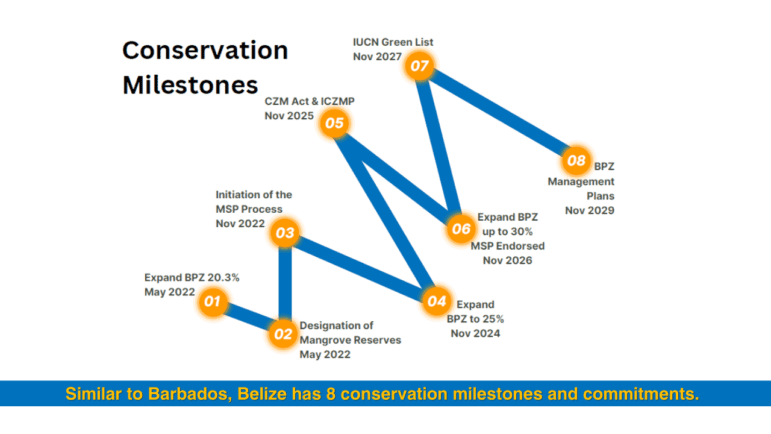
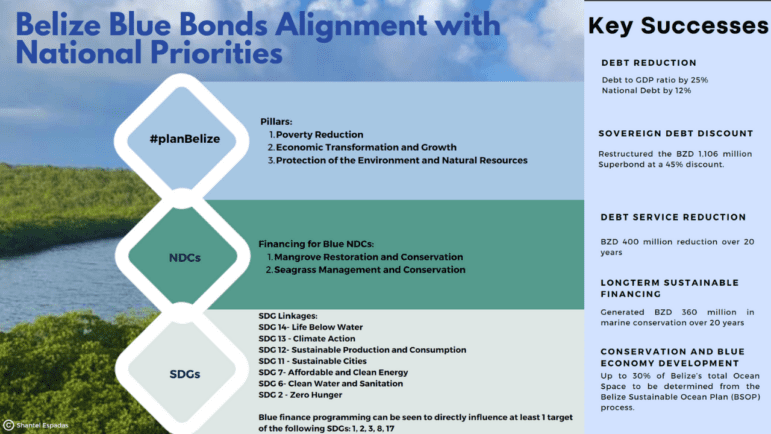
Valdemar Andrade, Executive Director of the Turneffe Atoll Sustainability Association (TASA) and former Director of Cruise and Director of Destination Planning and Cruise at the Belize Tourism Board, understands this balancing act and outlines how Belize incorporates the cruise companies’ fiscal responsibility. Belizean authorities divert 20% of the agreed-upon cruise head tax into their marine fund.
“That model is very important, because, if you’re going to do cruise tourism anyway, then there has to be a way to channel funds to protect the product,” he said.
In Belize, government officials addressed enforcement and maintenance by creating Conservation Officers with the power to warn, seize, and arrest.
Each conservation zone has its own unit that patrols. Last year, Andrade revealed that at the Turneffe Atoll, enforcement officers “execute about 35 – 40 infractions per year, resulting in 10 to 15 court cases annually”. However, the cost to fund one protective area for a year is high.
“I think enforcement costs us about a million dollars BZD ($500,000 USD) annually for one protected area. Our [total] budget this year, I would say, is $2.25 million USD for one area,” he said.
There are, however, differences between Belize and Barbados, as pointed out by the Roofs to Reefs’ director Marshall.
“We have different regimes relative to land ownership, relative to the activities associated with private sector enterprise versus public sector, relative to the strength of the NGO community, etc. So, in many instances, you have to chart your own path in this region,” he highlights.
While both countries partnered with The Nature Conservancy, Belize’s Blue Bonds are supported by strong NGO management, such as the Turneffe Atoll Sustainability Association (TASA) and Fragments of Hope, as well as existing marine protections, distinct marine geography, and direct funding from a 20% cruise head tax.
Barbados, by contrast, is starting from less than 1% protection and must design its own path, balancing a cruise-dependent economy with limited NGO capacity and a more centralised, government-led approach.
The Way Forward
Barbados, however, is only at the start of its journey and is looking at how to make its own impression.
“At the end of the day, you’re looking for sustainable utilisation. We don’t want a situation where we have too many visitors and they’re degrading an area. But we also don’t want to pursue conservation to the detriment of any of the groups of persons active within the country,” Marshall stressed.
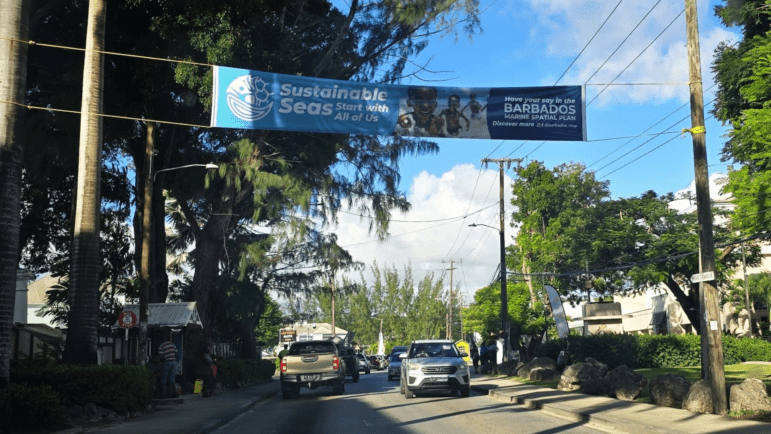
Professor Mahon also pointed out that protecting ocean biodiversity should go beyond tourist spots and encompass all marine biodiversity.
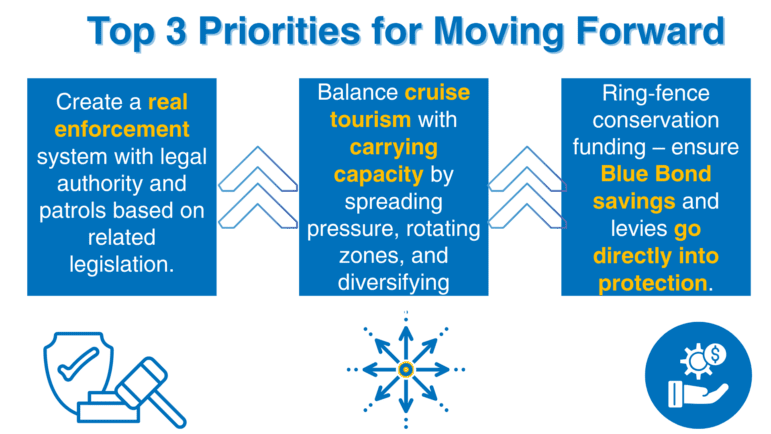
(Graphic by Esther Jones)
As Barbados weighs the economic gains of cruise tourism against the costs to its marine ecosystems, attention is turning to long-term governance reform. The proposed Barbados Ocean and Coastal Authority (BOCA), mentioned by the Barbadian Prime Minister, Mia Amor Mottley, at the Global Diversity Summit, aims to bring together the many agencies that now share responsibility for marine management, including the Coastal Zone Management Unit, the Fisheries Division, and the Marine Pollution Control Unit.
The Government’s National Biodiversity Strategy and Action Plan calls for stronger coordination and enforcement of the Coastal Zone Management and Marine Pollution Control Acts.
Currently, the Integrated Coastal and Marine Management Bill, 2025, has been gazetted and tabled for debate in the House and the Senate. This Bill will “repeal and replace the Coastal Zone Management Act, Cap. 394,” and strengthen enforcement powers under one governing body.
Barbados reached its second milestone (third phase) in September 2025, gaining “valuable feedback, data, and local knowledge to develop informed scenarios and practical options for how Barbados can best use and protect its ocean space,” including marine spatial planning research and data collection. The data gathered during this phase will help determine which areas of the island’s waters can accommodate tourism and shipping activities while balancing marine protected areas. The final report for this phase is not yet publicly available.
Testing of this balance continues in places like Carlisle Bay, where the competing realities of conservation and commerce unfold in real time. There, dive operator Andre Miller oversees excited cruise passengers as they collect their tanks and prepare to explore the underwater world.
For Barbados to reduce its debt and meet its sustainability goals, this scene must continue, allowing both cruise tourism and marine protection to coexist.
This story was produced with support from the Earth Journalism Network (EJN).
Also, thanks to Dr Elon Cadogan for technical assistance with this article.