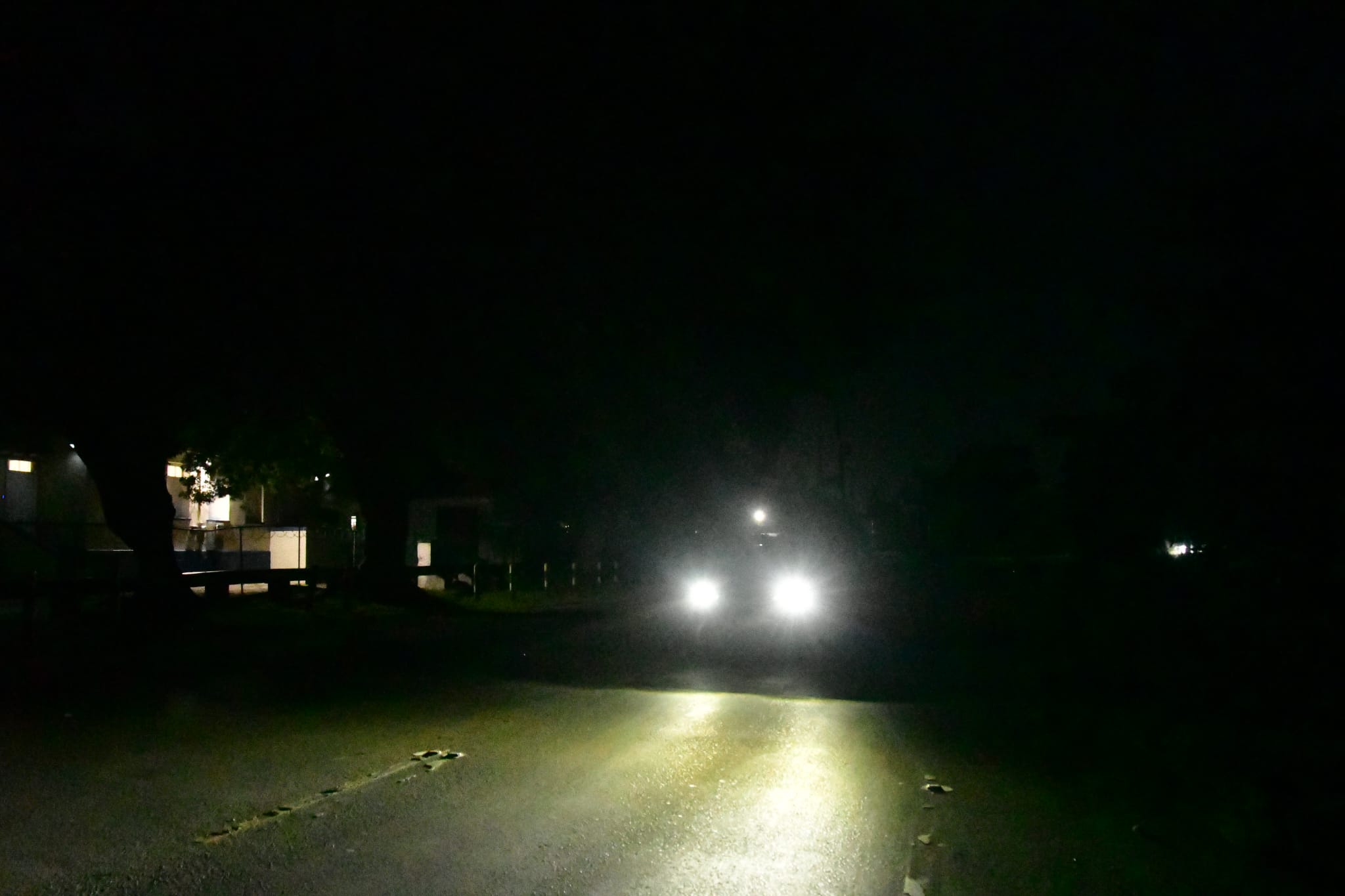
On a quiet night about 25 years ago, Ann stepped out of a work event in St Michael and into a darkness that would alter the rest of her life. The Barbados journalist, who asked to be identified by a pseudonym to protect her privacy, was robbed and raped at gunpoint while waiting for a ride in a poorly lit area.
The trauma has never loosened its grip. Now, every time she leaves home, safety frames her decisions.
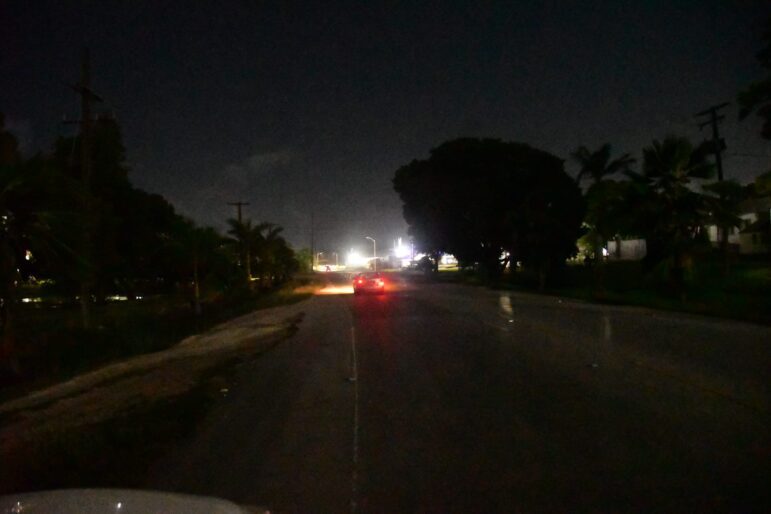
“All of my plans are based on ensuring my personal safety,” she said. “I do not go out alone at night because I do not feel safe. Barbados is too dark. Previously, public lights shone farther; now they go under the pole. During the day I am more comfortable moving around alone, but at night I am hypervigilant.”
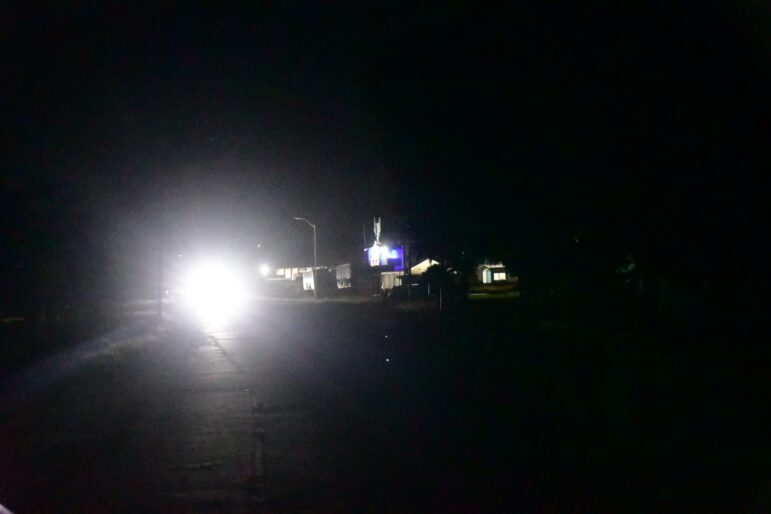
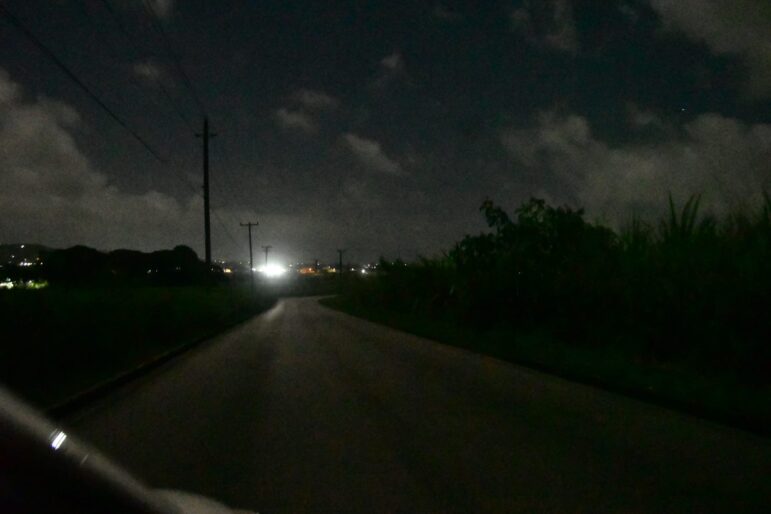
Her experience is not isolated. Across Barbados, many women say safety concerns are ever present when they venture out in public. At night, the problem is exacerbated by poor streetlighting that leaves many roads, gaps and residential areas nearly pitch-dark after sunset. But even in the daytime, catcalling and other harassment often mean they feel unsafe at all hours.
Activists and others interviewed for this story said that such issues, combined with rising crime, force many women to constantly assess their surroundings, alter their routes and plan every movement in ways rooted less in freedom than in self-preservation.
“I always look for exits and entrances everywhere I go, even in buildings,” Ann said, explaining that she never wears high heels as they “are not practical shoes.”
She also steers clear of dark or deserted places where danger could lurk.
“I avoid going places at night unless I have to,” she said. “If travelling on a ZR [public bus], for example, I note the number and WhatsApp it to my mother. Being driven is the preference: never walking unless it is to a nearby venue. I avoid events in some communities.”
Attacks on Women
Marlene Hewitt, president of the Business and Professional Women’s Club, said such fears are not unfounded.
Her organisation, which offers temporary housing for victims of domestic violence, frequently fields reports of harassment, threats, assaults and stalking.
“We see all types of women coming to us,” Hewitt said. “Safety concerns do not discriminate. … There have been quite a few attacks on women in public spaces. We see these cases often.”
Such incidents frequently make the news as well. On the evening of June 13, for instance, a female nurse was attacked and stabbed while walking down a path towards the entrance of the hospital where she worked in Jezreel, St Philip, according to the Nation Newspaper.
Another nurse told the newspaper that a robbery and other incidents had previously occurred in the area, as some of the staff commute to work via bus and walk down a long, dark path to get to the hospital.
The next day, on June 14, another woman was attacked in St Peter, sparking complaints from business owners and residents about inadequate lighting and other safety concerns in the community, according to the Nation.
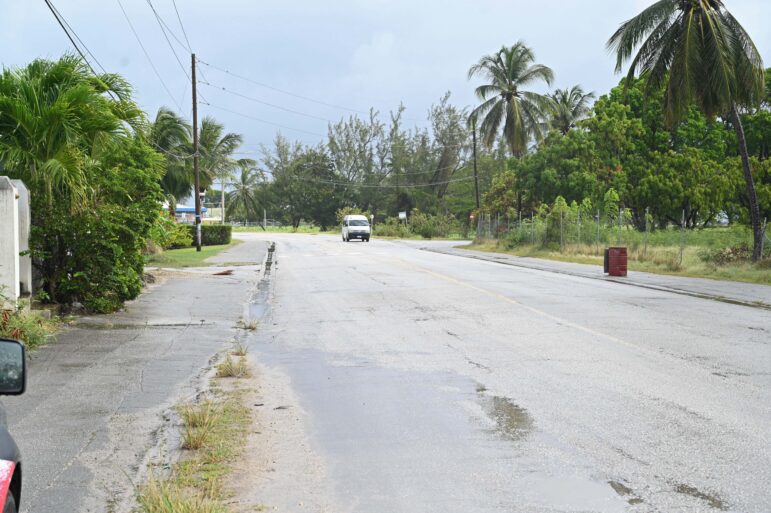
The victim, retired physical education teacher Janita Austin, sustained severe injuries when she was attacked by a machete-wielding man while on her way home after disembarking from a bus.
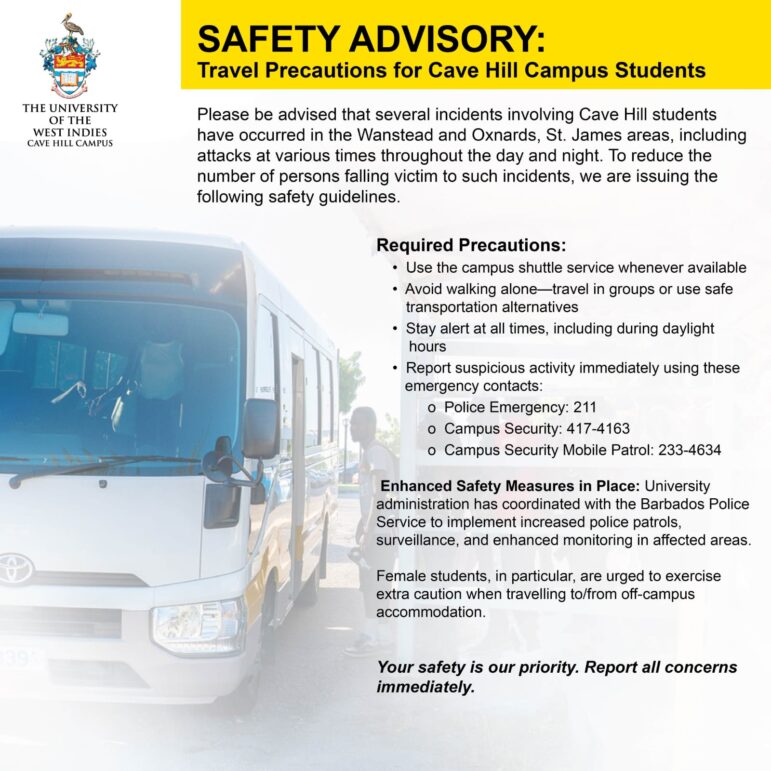
At the University of the West Indies’ Cave Hill Campus, fear has reached institutional levels. After reports of attacks involving students in the Wanstead and Oxnards areas, the university issued a safety advisory in November. As campus officials partnered with the police to increase surveillance and patrols, students were urged to avoid walking alone and to use shuttles, stay vigilant and report suspicious activity.
Intimidated
Sharee Theobalds knows such fears all too well. When the 24-year-old walks home at night, she grips a slim, silver pocketknife in her right hand the way some women clutch a set of keys between their knuckles.
“It’s not that I feel unsafe everywhere,” said Theobalds, a part-time model who lives in the Haggatt Hall neighbourhood in St Michael. “But if I’m in an unfamiliar area, I feel slightly intimidated.”
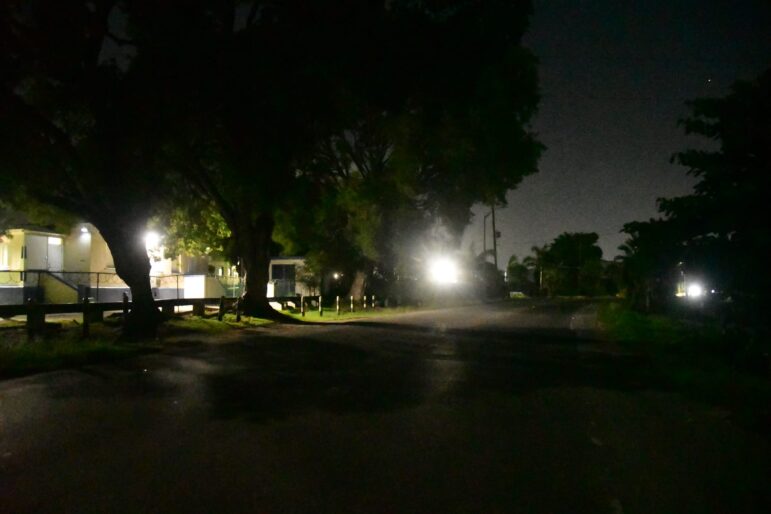
The fear did not appear out of nowhere. One night in Silver Sands, Christ Church, she noticed a man standing alone in a dark area: unmoving, unspeaking. She felt his presence before she fully saw him.
Another time, a man started following her near her home, calling out as he matched her quickening pace. She ducked into a friend’s house and made a call to her father.
“Come for me,” she told him. “Something isn’t right.”
Her fears have formulas now: well-lit equals safety; darkness equals danger. In certain areas she becomes “extra alert.”
“I always say where I’m going, who I’m going with, what I’m wearing,” she said. “It sounds extreme, but it’s necessary. My phone is always charged, and I also walk with my charger.”
Silence
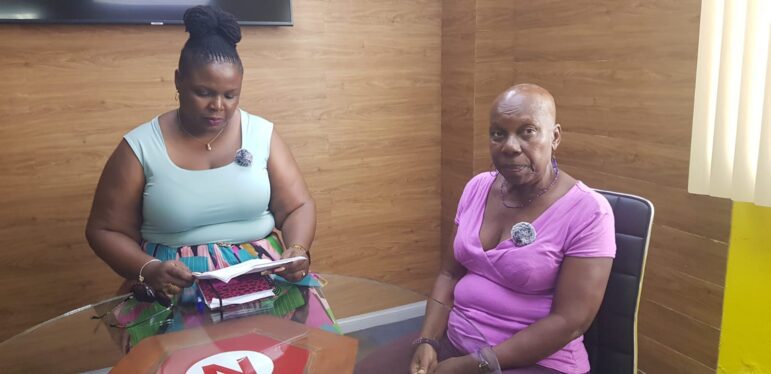
Melissa Savoury-Gittens, president of the National Organisation of Women in Barbados, said such fears are common — but they are only part of the story.
The other part is silence.
“There are still some women who are afraid to report,” Savoury-Gittens said. “The backlash — especially with social media now, I think that you’re judged and executed even before the case. ‘I wonder why she was there.’ ‘She put herself in that situation.’ ‘Knowing this woman, she probably does this.’ So you’re already being executed … by social media.”
Hewitt added that police stations are also a site of fear for many women.
“But I say to women, ‘If you go to the police station and you talk to the person that is there and you’re unhappy about how they attend to you, there’s always someone above them that’s the person in charge of that station,’” Hewitt said.
The Barbados Police Service also has a system for responding to complaints of misconduct, which can be made in writing to the Office of Professional Responsibilities.
Attempted Kidnapping
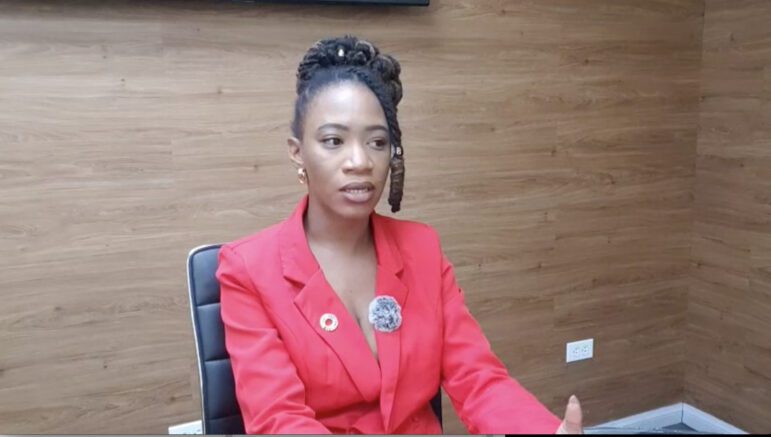
Ronelle King is another Barbados woman working to make a difference.
Her story of activism began one day in 2016 as she stood alone waiting for a bus. When a car slowed beside her, she thought at first that she recognised the driver. She didn’t.
When she declined the offer of a ride, the man reached out and tried to pull her into the vehicle. She escaped and went straight to the police, where she expected professionalism and privacy. But she received neither, she said.
“When I started to report, I asked if we could go to a space, because I was airing out my business in front of all the police officers,” she said. “There was somebody to the left who was writing, who looked up as I was narrating; somebody who stopped where they were going and stared while I was trying to narrate to the [male] officer.”
As she prepared to tell her story, the officer didn’t make eye contact, she recalled.
“He just looked up and he was like, ‘Proceed,’” King said. “So I tried to explain and he said, ‘Well, you tell me the full story and I will determine if it’s important enough to proceed with.’”
At that point, King said, different emotions started to take over.
“I just got really flushed. I felt really embarrassed. I felt overwhelmed,” she said, adding,
“He was not understanding. So I just immediately turned and left. I didn’t even say to him I wasn’t continuing. I just left in the middle of my sentence and walked out.”
Life in Leggings
That near-kidnapping became the catalyst for King to launch Life in Leggings, a non-profit organisation that works to end gender-based violence across the Caribbean.
As King shared her story more widely, many other women recounted similar experiences using her hashtag on social media.
“When we were having these conversations as a nation around domestic violence and a variety of forms of violence against women and girls, the younger women were more having a discussion online around sexual harassment — more so specifically street harassment,” she said. “They were talking about catcalling.”
Nearly a decade later, she said, greater public awareness is still needed.
“Some women do feel uncomfortable with people catcalling them,” she said, adding, “When it comes to street harassment, then you have the public perception that this is just a part of our culture, which it is not. It has been normalised within the culture, but it is not our culture.”
The normalisation is visible everywhere from Bridgetown’s bustling streets to Silver Sands’ quiet corners — and also in carparks in busy shopping centres across the island.
“You try your best to navigate it,” King said. “But deep down, it’s frustrating that you don’t have the same privilege as a man to just walk around in your own country throughout the streets just to run a basic errand. You have to navigate a minefield.”
Even being polite can bring additional harassment.
“Someone could do something for you, like simply open a door,” she said. “And you’re thinking just, ‘Thank you.’ You keep moving. And they take it as an invitation to come and say, ‘Hey, can I get your number?’ And then they start following you.”
Avoiding politeness, however, carries its own risks.
“Men often don’t handle rejection well,” she said. “And there’ve been instances where women have even been killed for rejecting a man’s advances. So it’s a double-edged sword.”
Teaching the Law
As part of her advocacy, King works to educate residents about the laws in place to protect them. For instance, she said it is not common knowledge that street harassment is illegal.
“Under the Minor Offences Act, you can stop a policeman and tell him that this person is harassing you,” she said. “But the fact that many people don’t know that you can utilise this act for protection really contributes to the underreporting and them feeling as though they don’t have any avenue to seek justice for themselves.”
Other countries, she said, have gone further by enacting stricter criminal penalties and working to educate the public.
“In fact, Trinidad and Tobago actually does a really good job of when Carnival comes around with a police press conference every year to let people know what constitutes as sexual harassment,” she said.
But even enacting stricter laws isn’t enough, according to the activist.
“I think policy plays a major role, but it’s not just the policy: It’s also the enforcement,” she said. “Because we do a good job in creating laws; [the] failure comes with enforcing them. And so I think I understand why women may not be eager to report. … For women to report, you have to create safe environments for them so that they would feel more likely to come in and report, because these issues are very personal.”
Hewitt also stressed the importance of reporting concerns to the police.
“In terms of policies, you have to get to the stage to even get the policy to happen,” she said. “So if I’m not reporting it to the police, it doesn’t matter. If I’m not feeling comfortable to report it for whatever, policy doesn’t matter. We know people are being harassed. We just want people to come forward.”
Crime Numbers
The Barbados Police Service does not regularly release comprehensive crime statistics — or information about the gender of victims. But numbers the service disclosed recently appear to support what women have been saying for years.
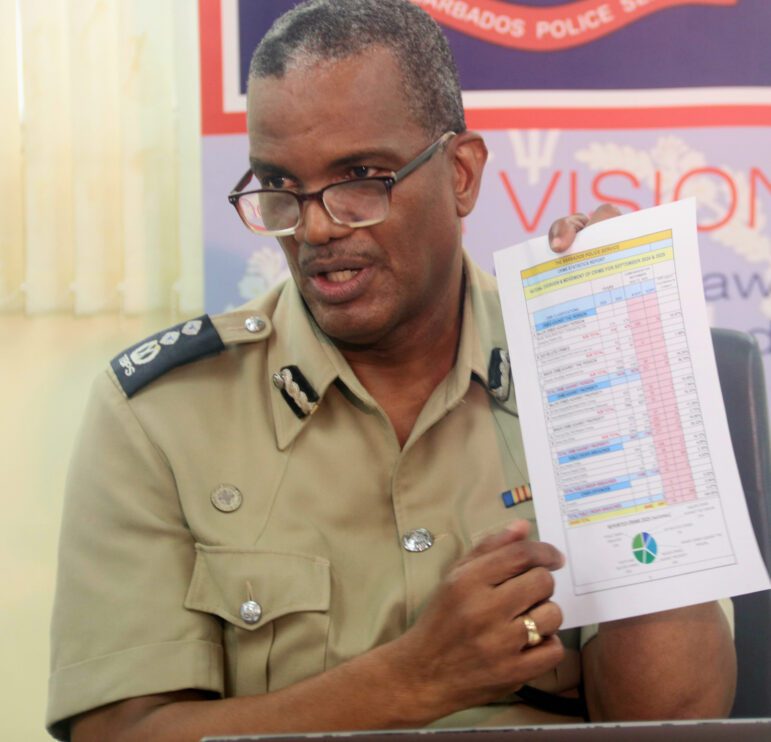
In an October press conference, Acting Commissioner of Police Erwin Boyce reported that crimes against persons climbed from 1,419 between January and September 2024 to 1,676 in the same period in 2025 — an 18 percent spike.
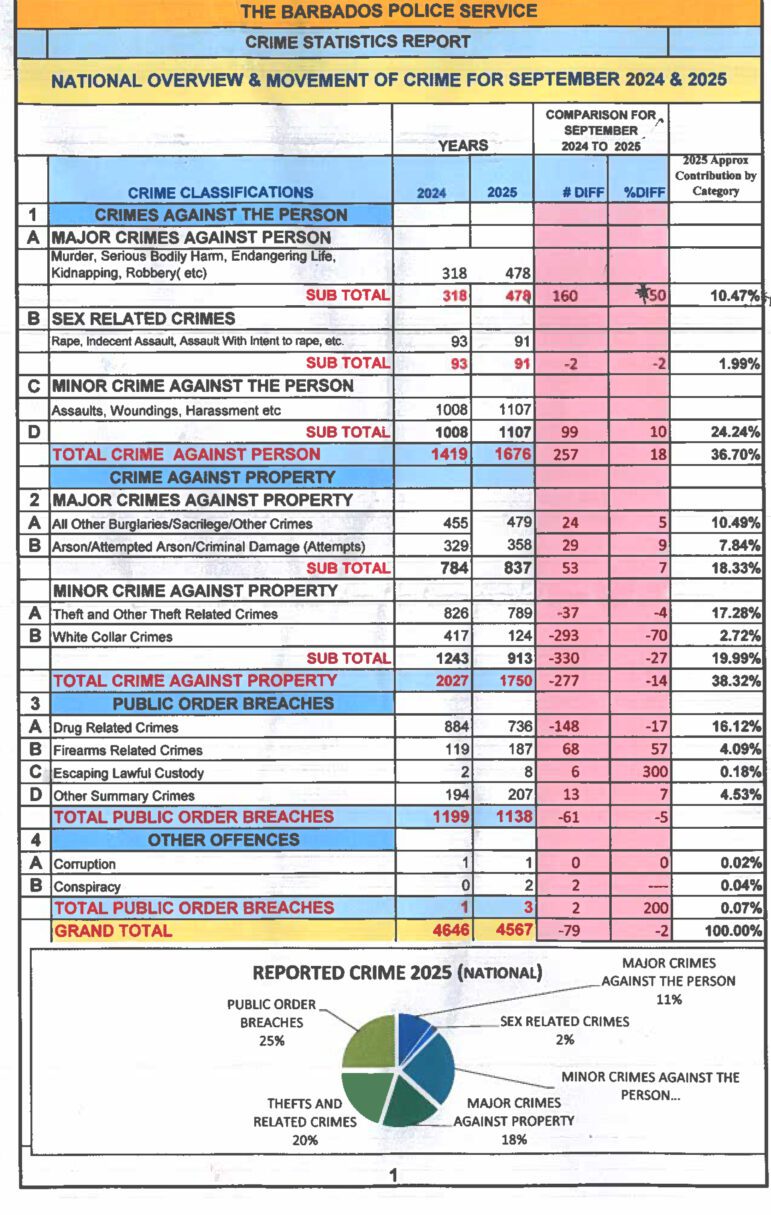
Major crimes — a category that includes murder, serious bodily harm, endangering life, kidnapping, robbery and so on — jumped by about 50 percent, from 318 to 478. Minor crimes such as assaults, threats and harassment also climbed, from 1,008 to 1,107, Boyce said.
However, sex-related crimes (including rape, indecent assault, assault with intent to rape, and so on) dropped slightly, from 93 to 91.
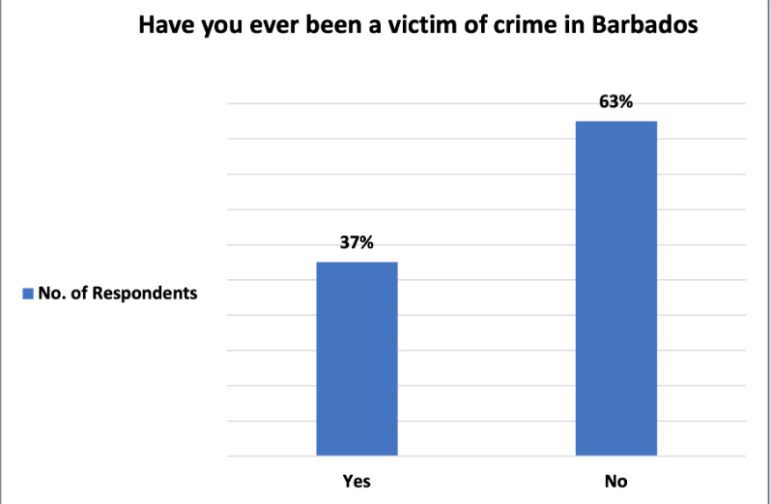
In a survey designed and administered by the Barbados government’s Criminal Justice Research and Planning Unit (CJRPU) and released to the media last July, 37 percent of respondents said they were victims of crime that included burglary, theft, robbery, assault, arson, shootings and rape.
Victims reported long-term financial, emotional and physical consequences including insomnia, paranoia and chronic pain.
Poor Lighting
Inspector Roger Babb of the Community Relations Department of the Barbados Police Service said efforts to limit danger include LED lighting and CCTV cameras installed in recent years by the government and the private sector.
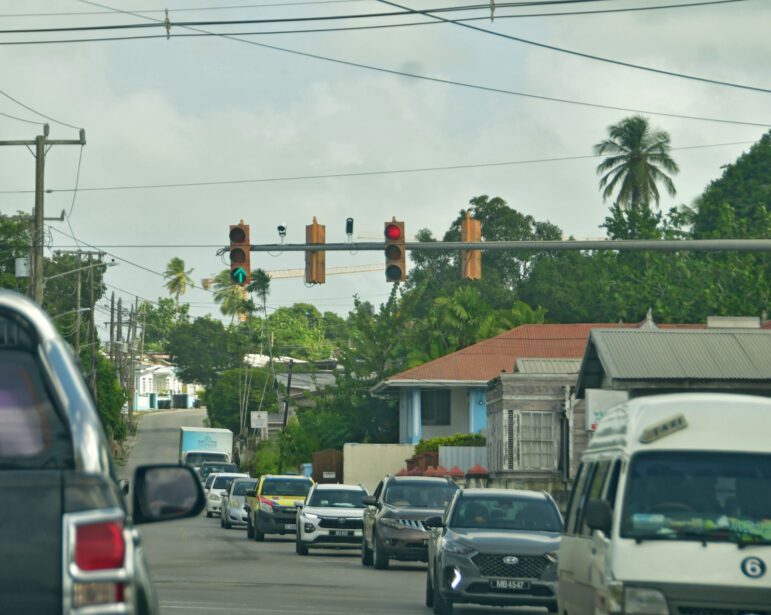
But he acknowledged that some communities in Barbados are still poorly lit.
“People should push their representatives to improve lighting and security,” he said.
Asked about the issue, the Ministry of Transport and Works (MTC) said it is planning a major lighting upgrade for the ABC Highway and Mighty Grynner Highway. But the ministry also acknowledged resource limitations.
In a statement, the ministry explained that the government installs lights primarily during major roadworks, while residential lights are handled on request after being assessed jointly with the Barbados Light and Power Company.
However, there is no national inspection schedule to assess where lights need to be installed or repaired, and the ministry relies on the public to report lights that are not functional, according to the statement.
“Accidents along the ABC Highway which involve damaged poles put a strain on resources, as only a limited number of replacements are imported each year,” the ministry added.
Lighting aside, Babb said that the first line of defence is personal caution.
“Stick to well-lit routes,” he advised. “Avoid isolated shortcuts. If confronted, do not fight back. Your life is worth more than your belongings.”
He also urged the public to report suspicious activity.
“We all share responsibility for safety,” he said.
‘I don’t feel safe’
Kimberley Browne, a 30-something media practitioner, is accustomed to late-night assignments, but she said fear is routine.
“I don’t feel safe,” she said.
Her memory of one night after 10 p.m. refuses to fade. She was walking through a gap towards her home in St Thomas when she heard footsteps behind her. A man in a black hoodie was walking fast, matching her direction.
“It was nerve-wracking and very spooky,” she said.
Even while waiting for transportation — those everyday moments when most people scroll their phones or check the time — her senses often sharpen as she watches for suspicious people.
“I always think they will rob me,” she said.
But Browne refuses to let terror rule her, so she has crafted her own protection system. She never travels the same route home every day. She alternates among three roads so no one can predict her movements.
She alerts her parents and boyfriend about every destination: name, number, time of return. When she must walk alone, she avoids poorly lit places and deserted areas.
Felix Huggins, of Premier Brazilian Jiu-Jitsu & Martial Arts in Warrens, St Michael, said he too has seen the effects of fear among women.
“In the last few years, there has been an influx of women coming to learn self-defence,” he said. “People don’t feel safe — not even walking from an ATM to their car.”
The first thing he teaches, however, is not how to punch.
“The first move every woman should learn,” Huggins said, “is to run.”
A Better Future
King said a better future for Barbados women begins with conversations.
“It starts with your circle,” she said, adding that needed discussions involve “calling out your friends, challenging these conversations with your family members. And then you start working outwards. … It calls as well for teaching men how to respect women, starting from young.”
Hewitt recalled a case where a woman was brutally beaten in public in June 2025.
“People were passing, watching and recording,” she said. “Nobody stopped to help.”
Why? Fear, again.
“They are very afraid,” she said. “I think it’s not necessarily that they didn’t want to. People are afraid that the guys these days have guns, … so we don’t want to be heroes. But sometimes, you know, we do need a hero.”