Agricultural technicians in Antigua & Barbuda are amongst the best trained in the Caribbean but a lack of political will has made it hard to turn those gains into lasting food security
Summary – Historically, Antigua and Barbuda had a thriving sugarcane industry. But it was based on slave labour and prompted violent revolts against British land holders. Today, its food system remains constrained by decades of underinvestment, stalled projects, extreme weather, and inadequate data. These constraints have left the country vulnerable to rising global food costs and supply chain shocks. The island nation is paying more than ever to import food. Less than 10% of what is consumed is produced locally. Political pledges to make the country more “food secure” have fallen short of even modest goals.
Key Findings
- Prime farmland diverted to housing or commercial use
- Successive administrations have repeatedly failed to provide adequate investment
- Crop yield reduced by climate, water scarcity, and the lack of agricultural data
- Insufficient storage and non-existent national reserve of supplies
- Underdeveloped export capacity
- Abandoning responsibility for research data and technical training to international donors
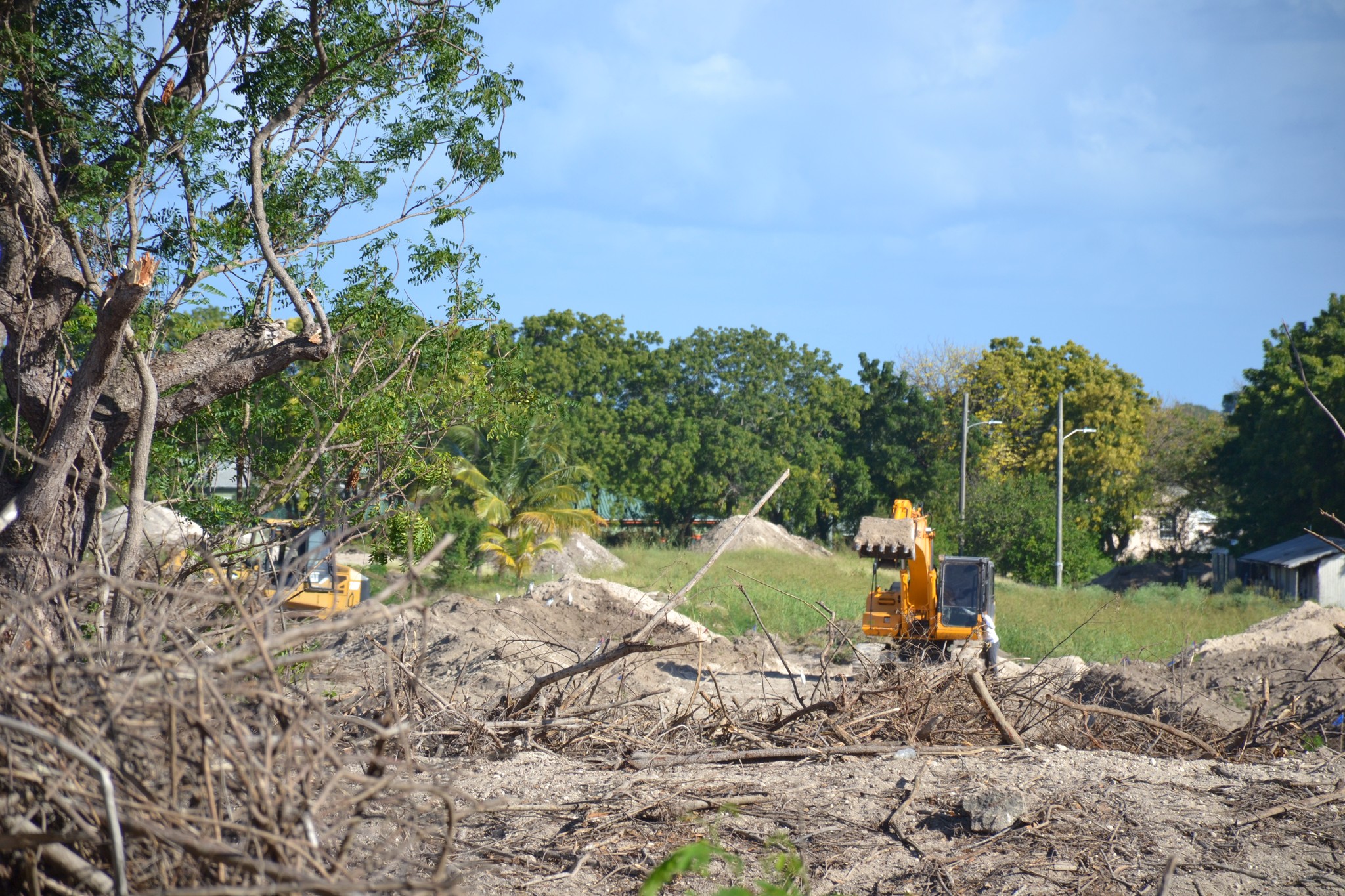
St. John’s, Antigua – The sun had only just begun to break through the bushes at Dunbars when workers arrived for what they expected would be another routine morning. Instead, they were met by the sound of steel cutting into earth. Two excavators were already at work, tearing into soil that had been studied, tested, and recorded for decades.
Some workers raised their phones instinctively, recording as years of research disappeared under dust and diesel fumes. Others rushed forward, pulling sweet potatoes and plants from the ground, trying to salvage what they could before the machines reached them.
And just like that, on January 5, 2024, nearly 40 acres of land were flattened. Fields that once supported agricultural research central to national planning were overturned within hours.
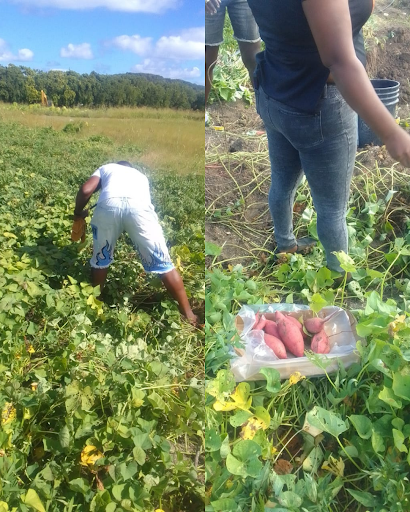
Dunbars Agricultural Station was demolished to make way for housing and commercial development under the government’s National Housing Programme. It eliminated one of the few remaining sites capable of supporting long-term agricultural research at a time when politicians declared food security was a national priority.
Decades ago, Dunbars was deliberately selected because its land mirrored the diversity of Antigua and Barbuda’s soil types. Researchers tracked rainfall there, measured soil chemistry, and tested crops under changing conditions. The data guided local farmers on crop suitability and helped technicians anticipate droughts, floods, and pests.
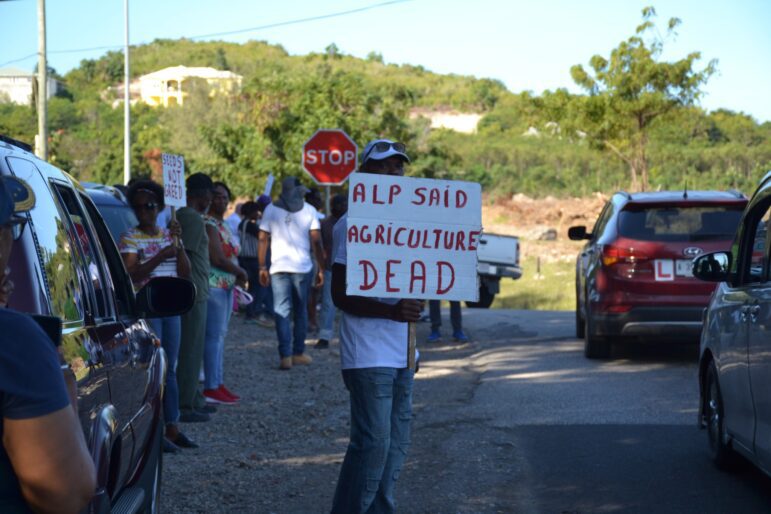
For years, agricultural workers at the station had warned that the sector was being systematically neglected by a lack of government support and through the erosion of basic working conditions.
Prior to the demolition, workers had raised concerns about unsafe and unhealthy conditions there. In December 2023, staff wrote to the Antigua Trades and Labour Union citing deteriorating infrastructure problems that had persisted for more than two years – issues mirrored at other government agricultural facilities across the island.
Among their complaints were concerns about job security and delayed payment of wages. But they also cited the lack of drinking water, toilets, protective clothing or the tools needed to perform agricultural work.
The loss of the land, they said, merely confirmed what the neglect of workers had long made clear.

A Matter of Priorities?
Perhaps the clearest recent acknowledgment of the country’s policy failures came at the start of the new year, when the Prime Minister addressed the potential fallout from escalating tensions between the United States and Venezuela.
Prime minister honourable Gaston Browne said that any protracted war in the Caribbean would have unintended consequences for small island states. “We can’t even feed ourselves, we’re one of the most food insecure countries in the world,” he admitted.
Yet, across Antigua and Barbuda, arable land has steadily been absorbed by housing and commercial development. In the absence of a national zoning plan, there is no clear accounting of how much land remains protected for agriculture, and farmers say access to farmland has become increasingly difficult.
The COVID-19 pandemic briefly shifted the narrative. When global supply chains faltered and supermarket shelves thinned, calls for food sovereignty grew louder. Farmers were urged to produce more locally. Dunbars, many believed, should have been central to that effort.
While the pandemic itself is now years behind us, the added pressure it exposed has not disappeared. Instead, it has morphed in quieter but more persistent ways – most visibly in rising food imports and changing consumer behaviour.
Rising Imports & Consumer Behaviour
By the time Marissa, a 2nd grade teacher and mother of two, reaches her third supermarket, she already knows she will not be buying everything on her list. With a grocery list saved to her phone, she moves deliberately between Epicurean, First Choice, and XPZ each month, splitting purchases in an attempt to stretch her salary. Fruits and vegetables from one store, powdered milk and household essentials from another. Each stop is a calculation.
She earns about US$1,500 a month, yet groceries now consume nearly 44 percent of her income. “[In 2023] I used to spend about US$400, maybe US$500 at most,” she explained. “Now I’m spending between US$500 and sometimes US$700 when I calculate what I buy monthly and weekly.”
She is sure that the increase is not seasonal. Christmas, she says, has little to do with it. What has changed is the steady, unrelenting rise in food prices. “Things are expensive,” she said plainly. “I buy what I can, and I leave the rest.”
Her children grab their favourite cereal brands but with a stern look, they know to quickly put it back.
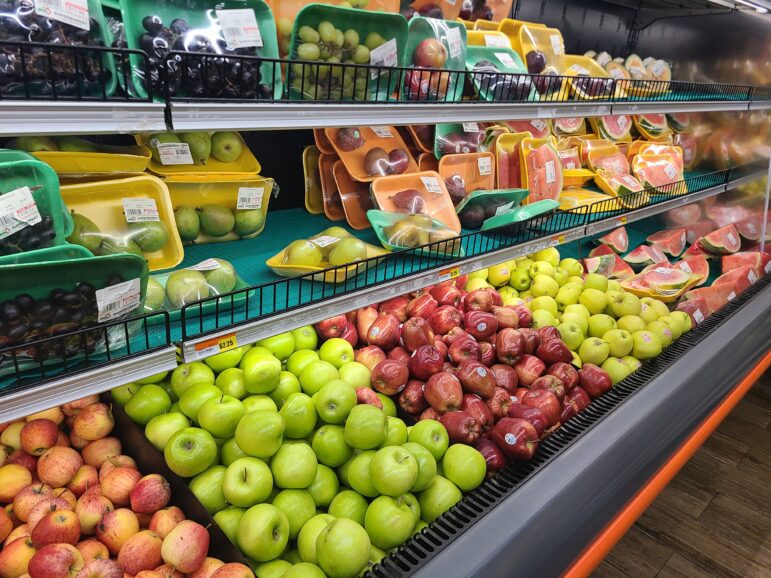
Her experience mirrors a national trend where households in Antigua and Barbuda remain heavily dependent on imported food, with prices still elevated long after COVID ended.
But the effects of food insecurity do not end at the checkout line. Over time, the choices households make under financial pressure – like what they can afford, what lasts longer, what fills stomachs fastest – begin to reshape diets in ways that carry serious health consequences.
According to the Global Nutrition Report, obesity affects roughly one in four women and one in eight men, while diabetes affects around 15 percent of adult women and 12 percent of men in Antigua and Barbuda. These challenges were flagged over a decade ago when the Food and Nutrition Security Policy for Antigua and Barbuda (2012) warned that the country was undergoing a nutrition and epidemiological transition, marked by a steady shift away from indigenous staples.
A survey conducted for this investigation indicates that food imports in Antigua and Barbuda increased steadily over time, driven in part by preference for imported products. The Ministry of Agriculture attributes this reliance to a lingering cultural detachment from farming, rooted in its historical association with slavery. Many consumers favour generic imported brands over locally produced alternatives.
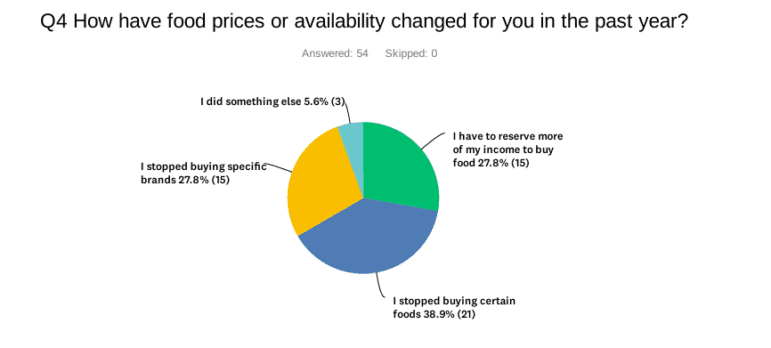
Most consumers said variety and taste are the primary reasons why they purchase imported brands. Others preferred local foods because they believe they are healthier. Most respondents were aged 34 and older, with 13 percent falling within the 17–33 age group.
In response to recent rising costs and periodic shortages, 64 percent said they were buying less or changing where they shop. These behaviours align with national import trends, as 57 percent of respondents reported spending the largest share of their food budget on meat, fish, and eggs, followed by vegetables and fruits.
Dancing in the Dark
Meanwhile, the government is making critical food policy decisions without a clear understanding of what its people eat, how much they spend on food, or how consumption patterns are evolving. For instance, despite projections that stay-over tourist arrivals would reach a record 1.2 million by the end of 2025, there is no system in place to measure how much food these visitors actually consume.

CIJN’s investigation led to the National Bureau of Statistics (NBS), where a small team tracks consumer spending and the flow of goods. Much of the data underpinning food security analysis still comes from the 2006 Household Budget Survey. The reliance on nearly 20-year-old data leaves policymakers effectively navigating today’s food security in the dark.
Jerry Aska, who oversees price statistics at the Bureau confirmed that food prices have risen with higher freight and import costs, a trend mirrored in the Bureau’s “Food and Live Animals” import data, which show a steady upward rise from 2011 to 2024.
While there’s been no official government census for more than a decade. Using 2011 population data, today’s food purchases may have increased by roughly US$300 per person or US$1,500 for a family of five per year.
Government figures put the country’s annual food import bill at approximately US$65.5million. Of that number, the US, the country’s largest trading partner, supplies roughly US$40 million annually. Yet shifting U.S. policies under President Donald Trump are creating instability.
In March 2025, freight rates in Antigua and Barbuda and across the region were projected to increase by more than 100 percent if the Trump administration implemented a proposal to fine Chinese-built or -operated ships docking at U.S. ports. Darwin Telemaque, Port Manager at the Antigua and Barbuda Port Authority, warned that such increases could have made shipping cost spikes experienced during the COVID-19 pandemic “look like child’s play.”
Meanwhile, U.S. sanctions on Cuba and Venezuela limit access to potentially cheaper regional suppliers. Diplomatic and military moves by Washington cast a shadow of uncertainty across the Caribbean region.
Leadership & Public Perception
Prime Minister Honourable Gaston Browne himself became a farmer in 2021. He said it was encouragement for local production. Others saw the “Farmer Browne” enterprise as a distraction in the market. His dabbling in farming, critics said, has reinforced the perception that politicians use the system to benefit themselves and their families.
Farmer Browne may be a good example of what a small farmer could achieve. But the honourable Gaston Browne has a much bigger job to do as Prime Minister. The man who warned the country “we can’t feed ourselves” is struggling to drive adequate government investment or set land use priorities that would match his concerns.
The Numbers Don’t Add Up
What happened at Dunbars was the physical expression of a deeper imbalance, one that becomes clear when the numbers are examined. The Ministry wants agriculture to contribute five percent to Antigua and Barbuda’s Gross Domestic Product (GDP) by the year 2030. But between 2019 and 2023, the country’s food import bill rose by approximately US$27 million, according to data from the Eastern Caribbean Central Bank (EECB). During the same period, government investment in agriculture remained among the lowest on record.
Despite repeated political commitments to food security, the Ministry of Agriculture generates too little revenue to reinvest meaningfully in the sector. Between 2016 and 2024, ministry revenues ranged between just US$300,000 and US$1 million annually, far below what is required to support research, extension services, infrastructure, or climate resilience.
Government reports routinely cite lack of funding as the reason projects stall or fail. Planned initiatives are delayed, bills go unpaid, and basic supplies remain out of reach. Partnerships with NGOs, international agencies, and private companies are interrupted, weakening research and technical support.
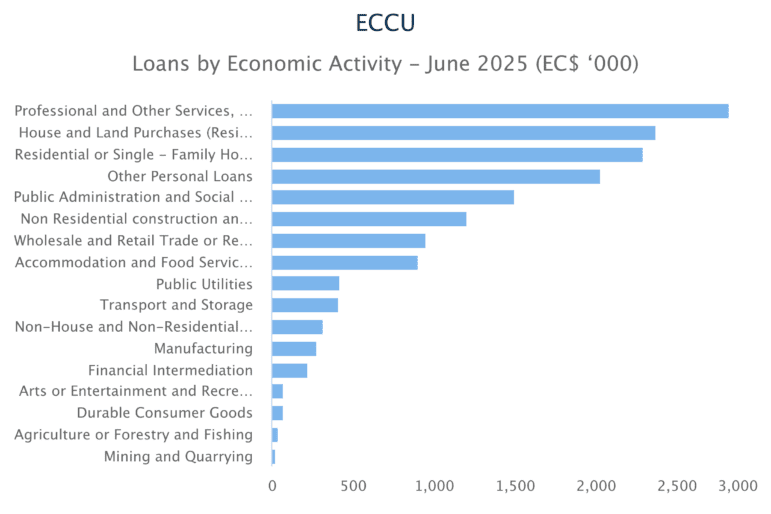
Chronic underinvestment is also clear when it comes to loans. Data from the ECCB show that the government borrowed only US$14,600 towards agriculture support in 2025 – one of the lowest amounts in the region. This makes it very hard for the agriculture sector to grow, modernize, or become more productive.
A Budget That Doesn’t Reach the Field
The 2026 national budget allocates US$11 million to agriculture – the largest allocation to date and a US$3.1 million increase over 2025. On paper, it appears to signal progress.
On the ground, farmers say little has changed.
A “Payroll” Budget
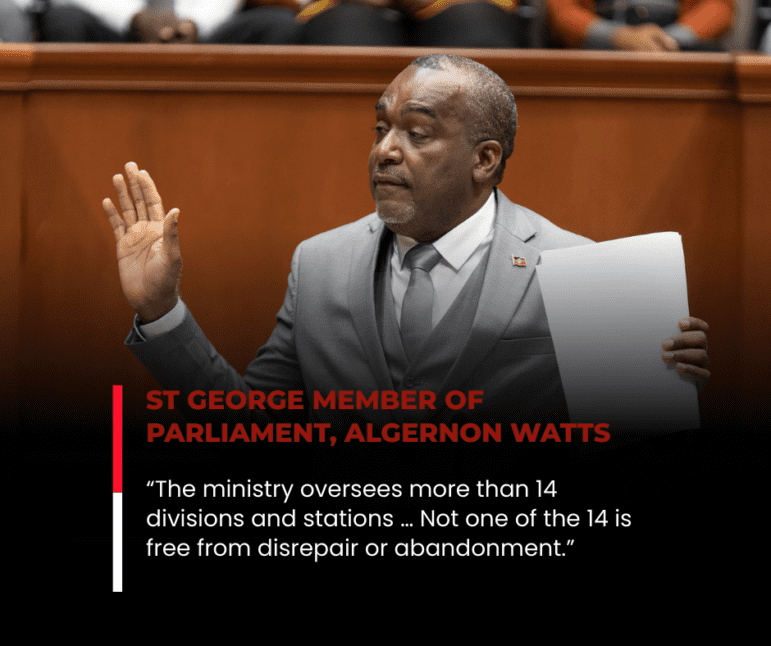
St. George MP and farmer Algernon Watts estimates that roughly 90 percent of the ministry’s budget is absorbed by salaries, wages, and allowances. Only about two percent, he said, reaches farmers directly. Watts described the allocation as little more than a “payroll budget”.
Historically, personnel costs have consumed the bulk of the budget, leaving minimal funding for crop production, livestock development, extension services, or infrastructure.
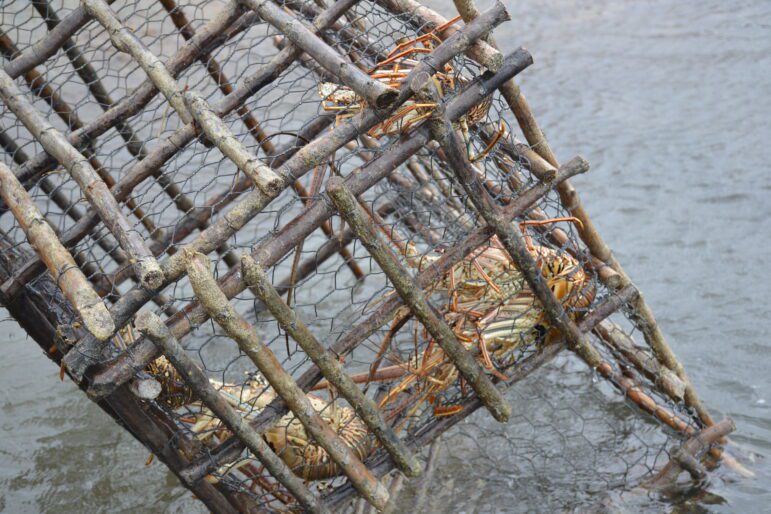
Added to this is the country’s limited export capacity. A 2023 Inter-American Institute for Cooperation on Agriculture (IICA) project report indicates that local food production is concentrated among just 1,500 to 1,600 small-scale farmers. Antigua and Barbuda exports virtually no domestically grown food. Lobster remains the only meaningful agricultural export, while reported coffee “exports” largely consist of repackaged imports.
Depending on Everyone Else
CIJN’s investigation found that for nearly a decade, much of Antigua and Barbuda’s agricultural technical capacity has been sustained by external partners. Agencies such as IICA, CARDI, and China Aid have filled gaps in data collection, training, and climate adaptation.
The Ministry’s 2026 budget proposes developing a new medium-term agriculture strategic plan but IICA has funded similar plans at least five times over the past 20 years. The government has failed to implement them. This CIJN investigation found an abundance of studies and plans but scarce implementation. It is a key part in understanding what is going wrong.
Agriculture Minister Anthony Smith Jr. acknowledged questions from our journalist seeking clarification but did not provide a direct response.
Farming Against the Climate
Even where funding exists, farmers face environmental limits and climate extremes that compound the problem.
Water remains one of the most persistent challenges. While farmers prefer rainwater, Antigua and Barbuda is highly drought-prone. More than 70 percent of the nation’s drinking water comes from desalination – a process that can damage soil and reduce crop yields if used for irrigation. Over years, it can wash away soil nutrients and cause desertification.
Long dry spells are increasingly followed by intense rainfall. Irrigation specialist Bradbury Browne estimates that heavy rainfall last November destroyed up to 90 percent of crops. “You basically have to start over planting again,” Browne said.
During droughts, farmers pay out of pocket to sustain operations. Livestock and poultry farmer Stanford Mings recalled spending more than US$187 on trucked water in a single week during the COVID-19 pandemic.
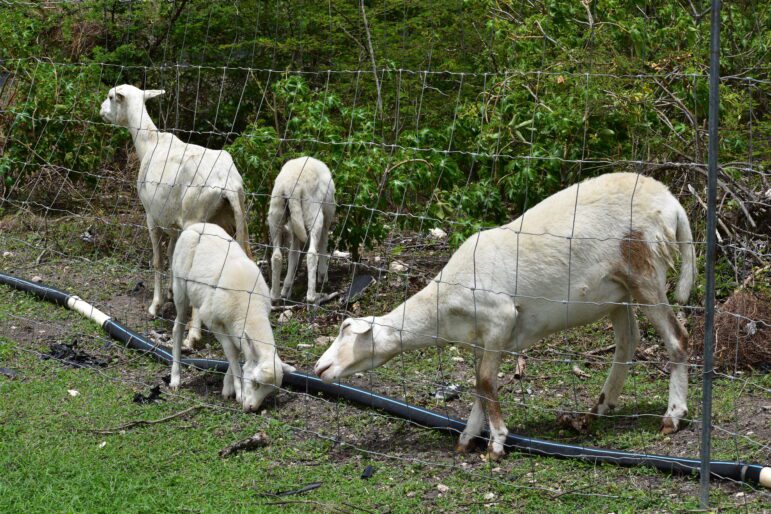
These pressures are magnified by outdated soil data.While experts know the country has three main soil types, much of that knowledge comes from surveys conducted decades ago. New mapping under the SoilCare Project supported by regional donors is not expected until late 2026.
Dr. Linroy Christian, Director of the Department of Analytical Services, said regional donors have collected hundreds of samples to generate detailed soil maps that can guide farmers on crop suitability, fertilizer needs, and potential contaminants.
In the meantime, lab tests are showing common issues such as salty soils, low organic matter, and changes in soil acidity caused by long-term fertilizer use.
Beyond production, Antigua and Barbuda lacks national storage facilities for crops or meat. Aside from a small CARDI seed repository, there are no buffer stocks to absorb shocks. Hurricanes, droughts, or shipping disruptions immediately translate into shortages. World Food Programme (WFP) representative Anne Kathrin Landherr noted that Antigua and Barbuda still lacks comprehensive data visibility and logistics systems for rapid disaster response.
The sector also faces threats from invasive species. Giant African Snails, green iguanas, Lethal Yellowing disease, and expanding vervet monkey populations continue to destroy crops.
Meanwhile, youth participation in agriculture remains low as many perceive it as physically demanding, low-tech, and low-income work. Dexter Brixtol Chief Laboratory Technician at the University of the West Indies, St. Augustine campus said that the dominant image of agriculture remains traditional and manual.
Government Intervention & Regional Integration
It’s important to note that Antigua and Barbuda has achieved successes. The country is self-sufficient in egg production; backyard gardening initiatives have reached more than 700 households and a mobile seed bank launched in 2025 aims to speed recovery after disasters.
The hope is that in 2026, the government will make good on a slew of announced initiatives to support the agricultural sector and ease the cost of living. Agriculture Minister Anthony Smith Jr. highlighted plans aimed at promoting sustainability and strengthening the sector’s resilience.

Regionally, CARICOM’s “25 by 2025” initiative – extended to 2030 – offers a framework to reduce import dependence by US$2.2 billion through local production and intra-regional trade. But local economist Petra Williams warns that progress will require redefining what food security means for a small, import-reliant island state.
Behind every shopping list and farm plot, invisible systems keep the country fed. Yet these systems are fragile, relying on subsidies, trade agreements, and outside aid.
For now, Antigua and Barbuda remains exposed, dependent on global markets, vulnerable to climate shocks, and constrained by decisions made decades ago.
Bulldozing the Dunbars Agricultural Station for housing and commercial development was not the beginning of the problem. It is the event that unmasked how the government’s economic decisions have derailed promises of actually improving food security for the nearly 100,000 residents on the islands.
Political promises of food security collide with how the government actually sets its priorities. The Dunbars case makes that impossible to ignore.