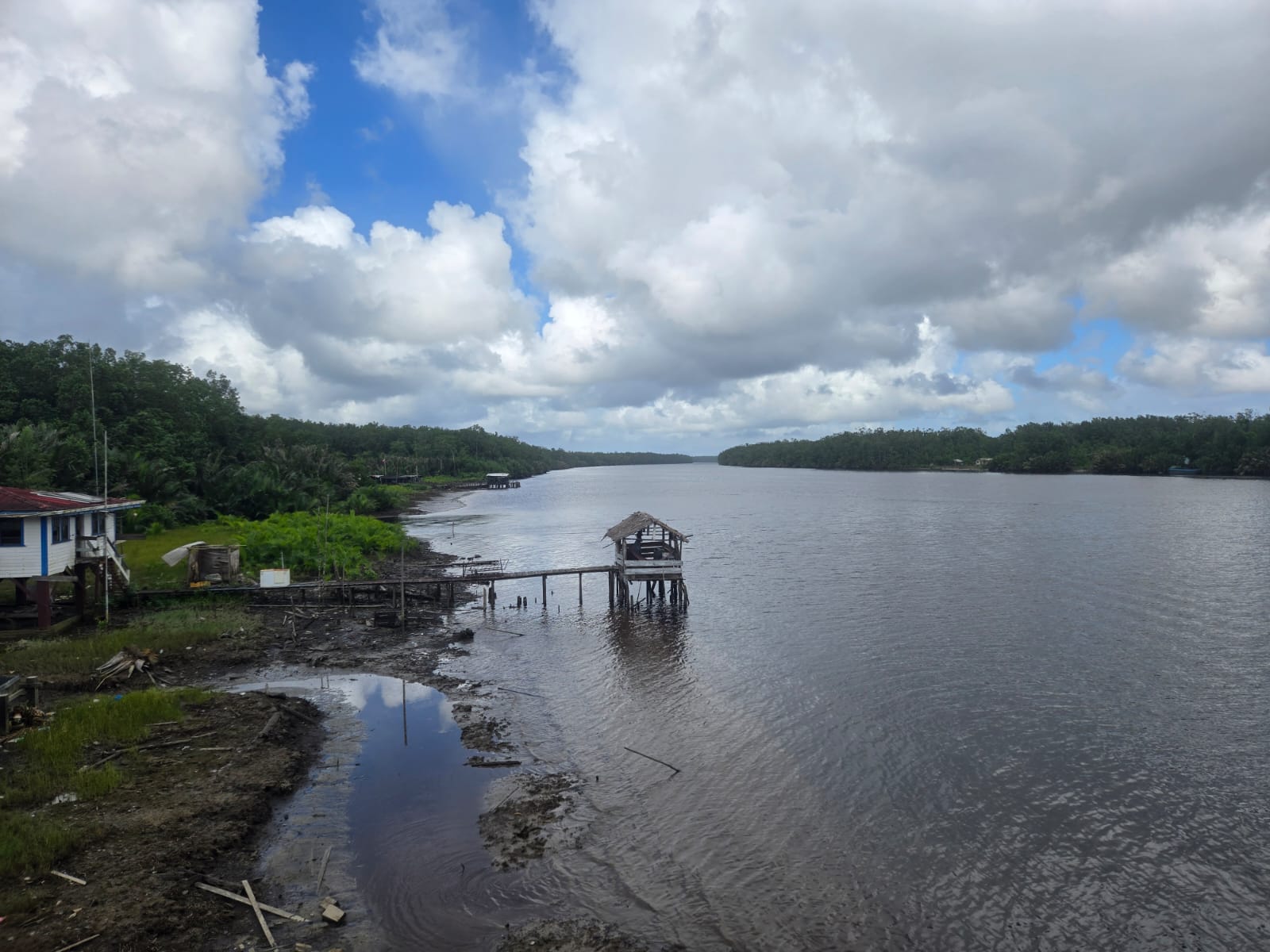
The forcible removal of Venezuela’s President Nicholas Maduro in January 2026 still remains fresh in the minds of hundreds of Guyanese who live along the border between Guyana and Venezuela. It is almost as vivid as Venezuela’s referendum held in 2023 and the 2025 election in Venezuela which “appointed” a governor for a large portion of Guyana known as Essequibo.
Those two specific developments fueled fears in Guyana of a military takeover by the Venezuelans. Many Guyanese living in border communities migrated briefly to the country’s coastal areas while others who remained in their villages, more conspicuously displayed their country’s “Golden Arrowhead” featured on the national flag.
News of Maduro’s removal was nevertheless met with mixed reactions even in Guyana. While many Guyanese celebrated the Venezuelan president’s removal and charges in the United States, others were sceptical about what his absence would mean for Venezuela’s decades’ old claim to two-thirds of Guyana in the Essequibo region.
Many of these people live in border communities between the two countries. They have seen strange helicopters over their communities. They have either seen or have had interactions with Spanish-speaking gangs and have families in Venezuela who shared online content signaling a military posture.
In Guyana, there are several communities close to the borders with Venezuela, like Etheringbang and Arau in Region Seven and communities like Imbotero and Mabaruma in Region One.
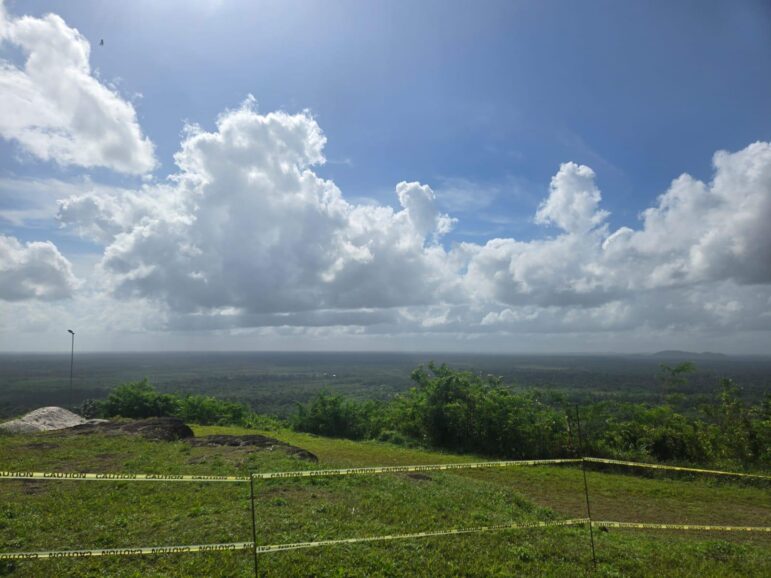
Venezuela was once home to thousands of Guyanese who migrated decades ago to benefit from a thriving Venezuelan economy. Today, thousands of Venzuelans are working in Guyana – “the fastest growing economy” in the hemisphere since its discovery of oil.
Many Venezuelans work in mining and construction while many operate food businesses and are employed within the hospitality sector.
CIJN recently visited Guyana’s Region One, namely Barima-Waini for a glimpse of life at one of the closest points to Venezuela.
Many of these communities are home to several of the country’s indigenous peoples, including the Lokono, Kalina and Warao. Commercial activities are limited in these areas, and many rely on farming, fishing and gold mining.
There is heavy reliance on boats for transportation and over new roads being constructed in different parts of the region. There is therefore now an influx of motor vehicles.
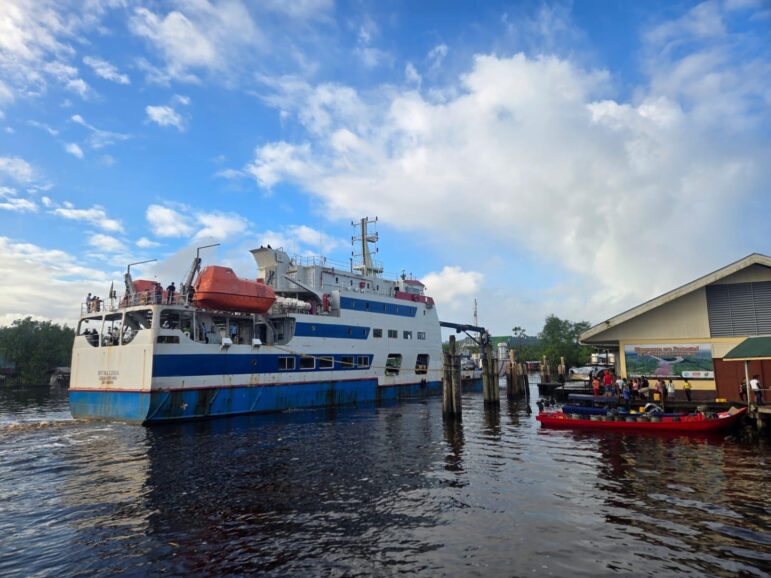
Getting to Mabaruma and Port Kaituma from Georgetown can be only done via air and ferry service. The latter can be unreliable and is only available between the capital city and these destinations once every three to four weeks.
There are no roads between the capital city or any other part of the country that produces food and other necessities for these communities in Region One.
So, the cost of air and water travel dictates the prices for food and other items based on such a supply chain. For decades, many Guyanese living in these parts relied heavily on food, clothing and most importantly fuel coming from Venezuela. However, in the last ten years, those supplies have begun to dwindle and can now be described as being in danger of disappearing completely.
For decades, life for many in Guyana’s border communities, closer to Venezuela, has been largely dependent on Venezuela. Guyanese traded in fuel and food and even had their children integrated into the Venezuelan school and health care systems.
In this examination of this situation, we navigate how this has changed over the decades for many living in Region One border communities. This is done through the experiences of families returning to Guyana, life on the border, and what has become of the unofficial trade between the two countries.
On the Border
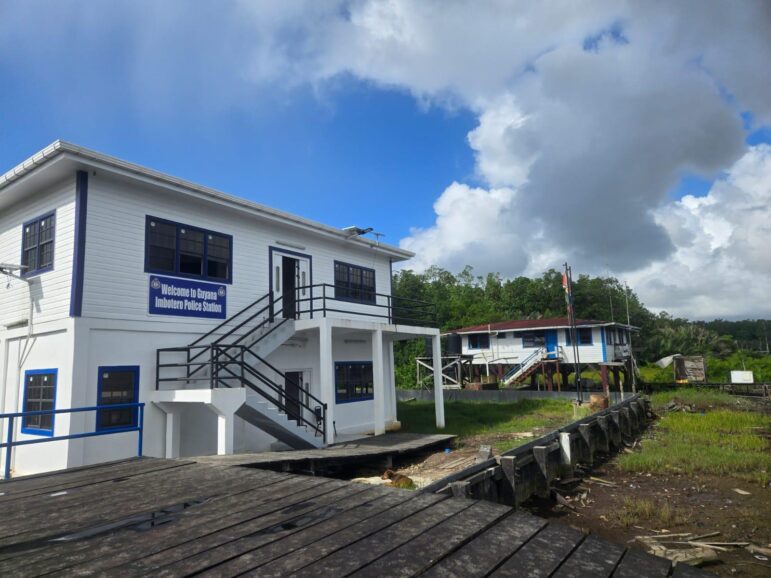
It is something to see. The Imbotero Police Station operated by the Guyana Police Force sits on the left bank of the Barima River and just a few metres away on the very river is a naval base operated by the Venezuelan military.
The two structures vary in colour and sizes, the police station wears blue and white synonymous with Guyana’s police while the naval base flaunts a dark olive green flanked by the distinctive “Bandera de Venezuela” flown close to the river.
Occupants of both buildings observe the daily movement of people on the Barima River. This includes the ferry that leaves Kingston Wharf in Georgetown heading down the Barima River to Kumaka Landing in Mabaruma, together with fuel and fishing vessels and smaller passenger boats.
We are told that people entering Guyana could report to the Immigration Officer at the Police Station and that the Venezuelan soldiers may respond to passersby in the river.
There are a few homes on the other side of the river including a shop and a fuel port. The shop is critical for people who live in Imbotero including officers at the police station and soldiers at the naval base.
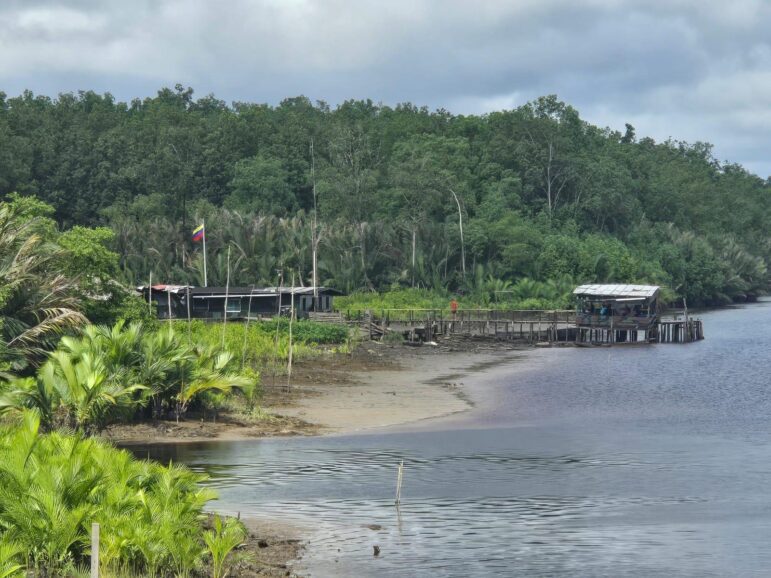
Venezuela is described as a “not so distant” land by many who travel between the two countries, “Yuh could take about two or three hours to reach over there” Simon tells CJIN.
The 47-year-old trader has been operating a small passenger boat between the two countries for years. Simon said he would take Guyanese to Venezuela but explained that within the past decade he has been transporting more Venezuelans who live and work in Guyana.
“I don’t do a lot of trips lately, it is too harassing but up to last year, I would run about 20 people every two to three days,” Simon told CIJN. Explaining what one of these trips entails, Simon said he would navigate various creeks and rivers in neighbouring Venezuela before he gets to the Atlantic Ocean and into the Barima River that separates the two countries.
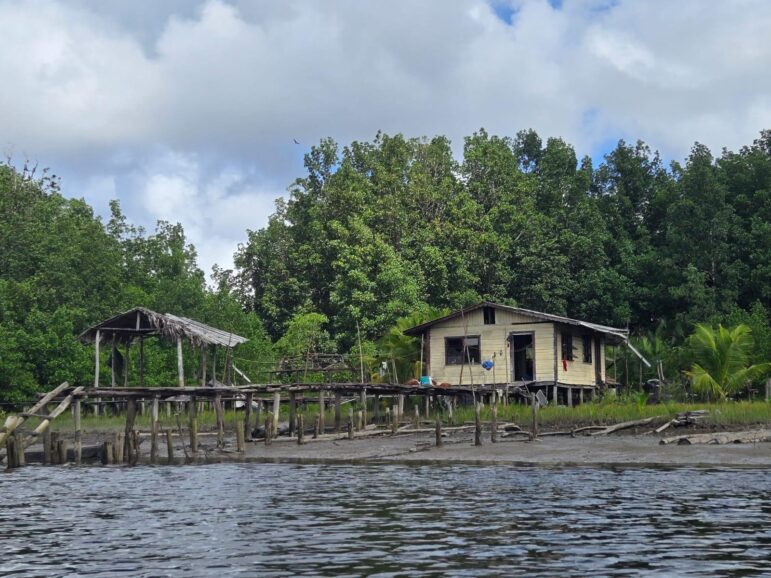
There are several small communities along the Barima River – among them the village of Imbotero. The first checkpoint for entering Guyana is the Imbotero Police Station.
Simon boasts that he does not always have to stop at the police station. “Sometimes people coming here so much, they have their documents but sometimes, you stop so they can see immigration.”
At the Imbotero Police Station, we are told that the borders have been “closed” which resulted in less speed boat traffic. “Border closed?” Paul (name withheld) chuckles. Paul, along with some of his workmen, is loading fuel barrels into a boat at a small convenience shop across the river from the Imbotero Police Station. “The borders are never closed, people who live here and there depend on both countries,” he advised.
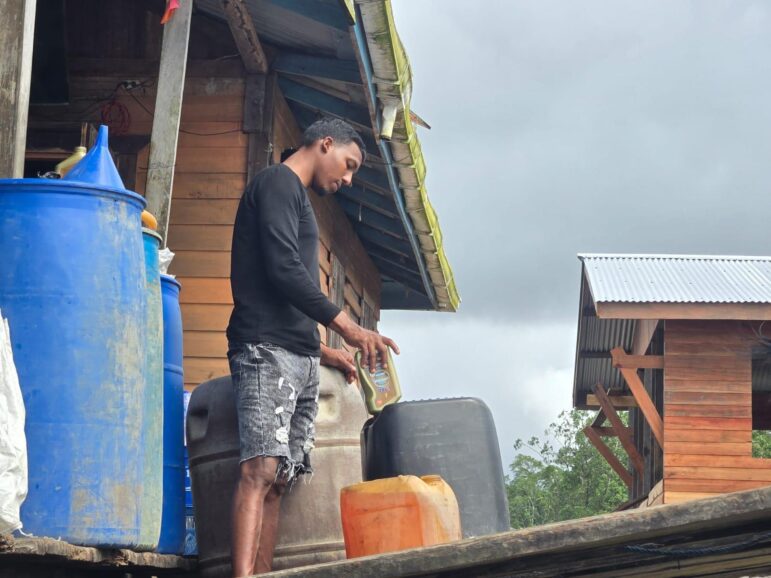
This shop sells “everything” from fuel and cooking gas to clothing and food supplies. Among the food items are Venezuelan products.
Pointing to pasta and flour, Simon said these are the packages that some of his passengers would bring to Guyana to sell. “Those are some Spanish things they like to eat here.”
On the shelves are also many products made in Guyana, like packaged “Demerara Gold” Sugar and “Thunderbolt” flour.
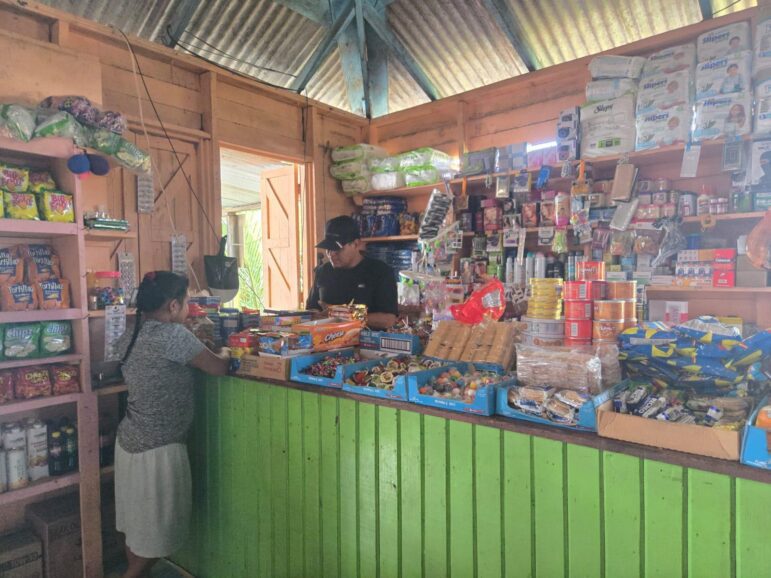
Thirty-year-old Shelly who visited the shop to make a small purchase feels that there are fewer available options with a smaller number of items coming from Venezuela.
She said there were many more food options up to a decade ago. “We had more variety and the prices were not so heavy for food,” Shelly explained.
Fuel was among the needs, traded unofficially across the border. There aren’t well established official reasons behind the reduced trade in fuel between the two countries in these parts.
Residents in several of the communities on the border offer different explanations. They listed “ongoing tension” between the two countries over Essequibo, and also the impact of Venezuela’s economic decline on the availability of fuel.
Fuel nevertheless remains in high demand in Region One with heightened economic activities including gold mining.
In Imbotero Village, fuel is needed mainly for river craft. The community is a small one with less than 50 people and lies within the Imbotero Creek just off the bank of the Barima River.
Its leader or Toshao is Simon Lakhan, a farmer. “We usually need a lot of fuel to get to the farms,” Lakhan explained. “Many years ago, cheaper fuel came from Venezuela, now we get it from Charity,” he said, “and is a lil bit more money.”
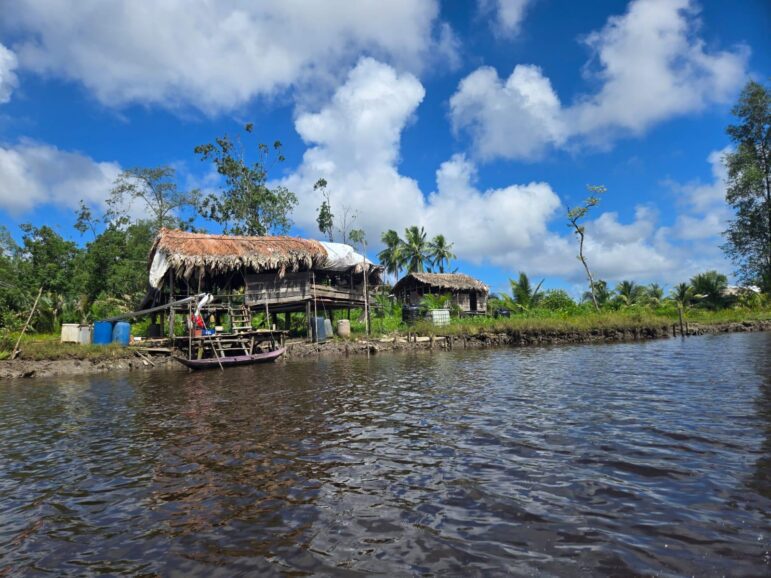
Back at Kamaka Landing in Mabaruma, Derrick Persaud solicits the assistance of porters to offload more than 50 barrels of fuel. “These coming from town,” Persaud said. That is Georgetown – Guyana’s capital.
There is no way of verifying that the fuel is actually from an official fuel source in Georgetown, but Persaud said he travels between Charity in Region Two to Kumaka in Region One transporting fuel.
“You leave from Kumaka, you go through the Barima River into the big Waini into Moruca, 99 turn, you reach Moruca and straight into Charity,” Persaud said as he described the route he and about two porters would take.
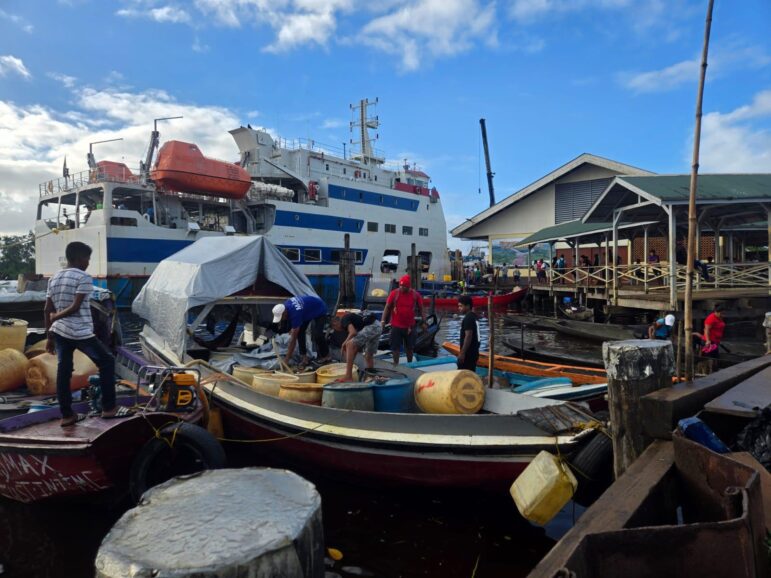
This trip can take up to seven days as boats that arrive in Charity have to join a queue for fuel. Some boats transport close to 50 drums of fuel at a time, and larger vessels as many as 100 drums.
“If you want to break even, you have to be looking to bring more than 50 drums,” Persaud explained. This could be the only source of fuel for communities in Region One, so the demand is high and so is the cost. “People hungry for fuel here because normally is a lot of vehicles, a lot of boats, a lot of river life,” he said.
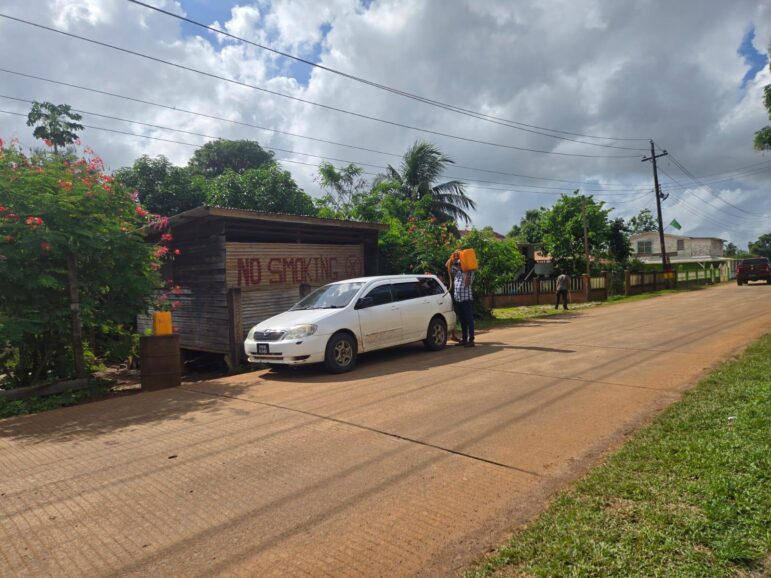
Fuel is also important for mining. Mining is mainly done in Port Kaituma which is about 54 kilometres from Mabaruma.
When CIJN visited the Kumaka Waterfront, one gold miner was present to buy fuel. “I don’t want my name to call,” the man said, agreeing to speak with us anonymously. “This here is a need right now for us in Four Miles.”
“Four Miles” is a mining area and is referred to as “Four Mile Backdam” as it is home to many gold mining camps. “My boss said we need about 20 barrels, so I came out to get those,” the miner said.
The fuel is transferred from one barrel to another and then transported via boat to Port Kaituma. Once in Port Kaituma, the barrels are then taken to the camp sites via trucks.
The gold miner claims that he has worked various mining sites across Guyana but said that working at sites close to the border with Venezuela can be dangerous.
“You just don’t know who them man got running these places,” he said. “They would be monitoring your camp and when you wash down (gold), they run in and rob you.”
He has not been at a camp that has been robbed but claims that he had friends robbed by Spanish-speaking gunmen. “I said these man is Venezuelan but sometimes I don’t know, could be people we know trying to confuse the camp.”
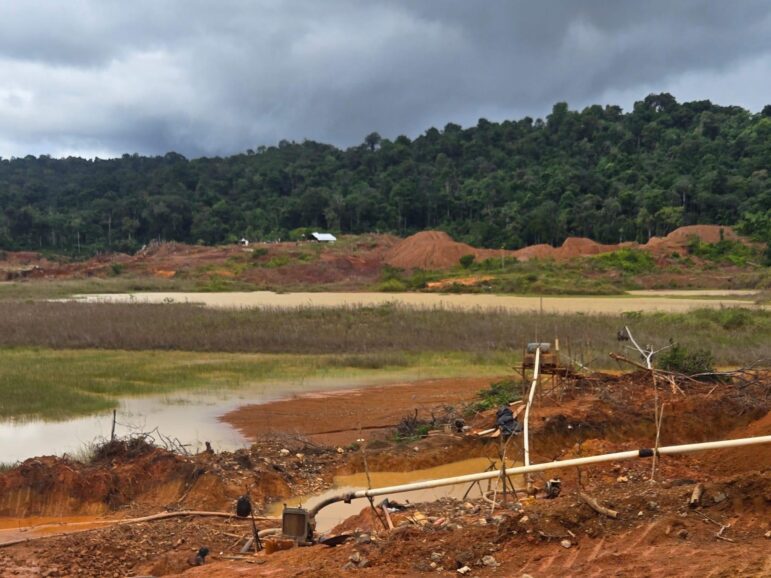
Many other goods also appear to make their way from Venezuela to Guyana. At Kumaka Landing, we spotted imported beverages and food merchandise in one of the boats being offloaded.
Kumaka Landing is not the only port for goods and people entering Mabaruma. The Amacuro River close to the Coursima Village is one of the unofficial transportation channels between the two countries.
As we head to the Coursima Village, CIJN is told that there is a “landing.” That is where small boats are tied after they come to the shore. This landing is nestled within the dense forest with small homesteads in its close vicinity.
As we reached the area to walk to the landing, it seemed like the most unusual and secretive place for movement of people, but it is that mystique that allows for unofficial trade and movement of people to occur.
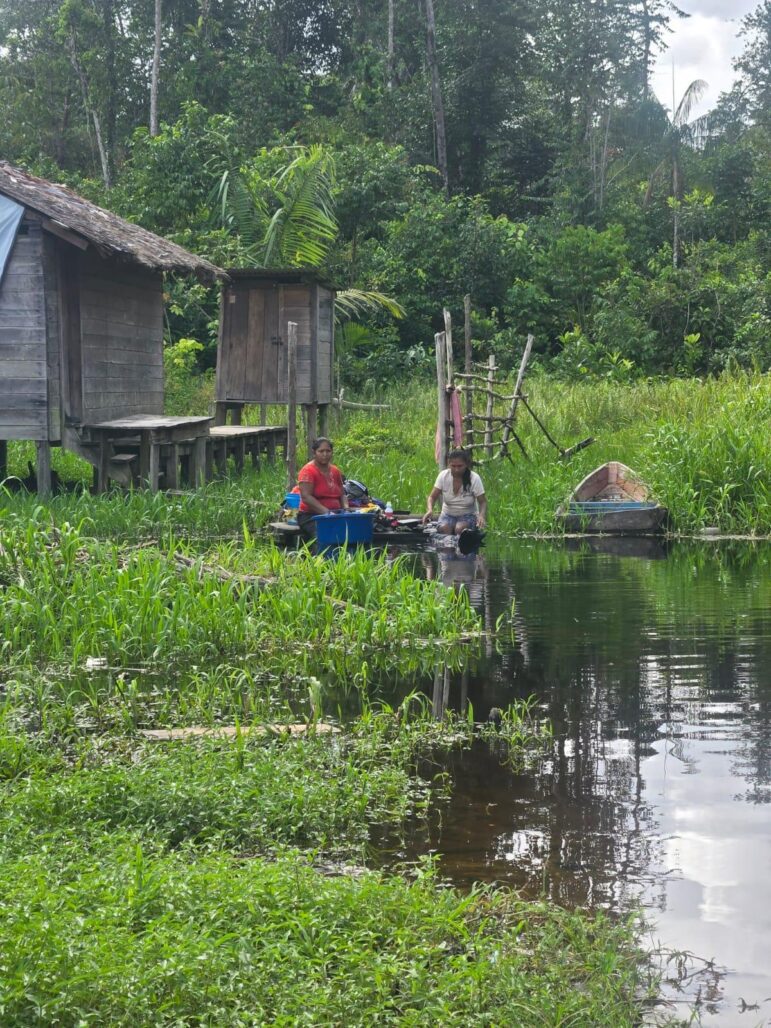
In Coursima, we followed a recently-constructed concrete path to a path between trees, where women sit by the water way washing clothing as small canoes are visible in the waterway. Our guide Waldo Johnson explained that this “landing” has “always” been there. “Sometimes the water is low, so the Warao people pull their boats along the Amacuro,” he told us.
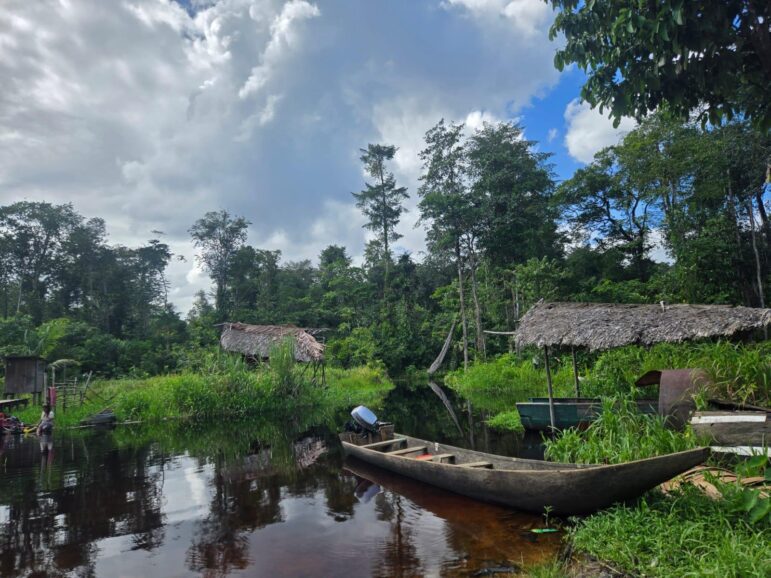
A small shop in the area had numerous products on display for sale. “These are all from Kumaka Landing, we buy everything there,” the attendant tells us. Eggs are in high demand.
“Many people can’t afford meat like chicken, so people come and buy two eggs or so,” the attendant explained. Many of the customers are indigenous Warao “migrants” she claims.
A small cluster of thatched roofs homes in Coursima belongs to a Warao family. But at the time of CIJN’s visit, they were not there, “They may have moved to another location,” Johnson suggested.
Warao People Adjust to New Homes
The Warao can be found in large numbers among Region One residents. Many Warao families have been navigating the waterways between the two countries for centuries.
Waldo Johnson, a Mabruma native, tells CIJN, “so this is their home too, even though many people call them migrants.”
Johnson estimates that since the economic decline in Venezuela, many communities in Region One are seeing more Warao families settling in one place. Along the Barima River, small thatched-roof homes are visible in an area called “Smith Creek.”
On the Imbotero Creek right off the bank of the Barima River, many Warao families have erected small homes using bamboo and branches. These are distinct from the wooden homes in the small riverine communities.
During the day, most of the men are away at the farms. “You would only find the Warao women here now, and they wouldn’t speak much unless the men around,” Valarie, an Imbotero villager told us.
The few Warao women seen in this village were washing and cooking while a few children took baths in the river.
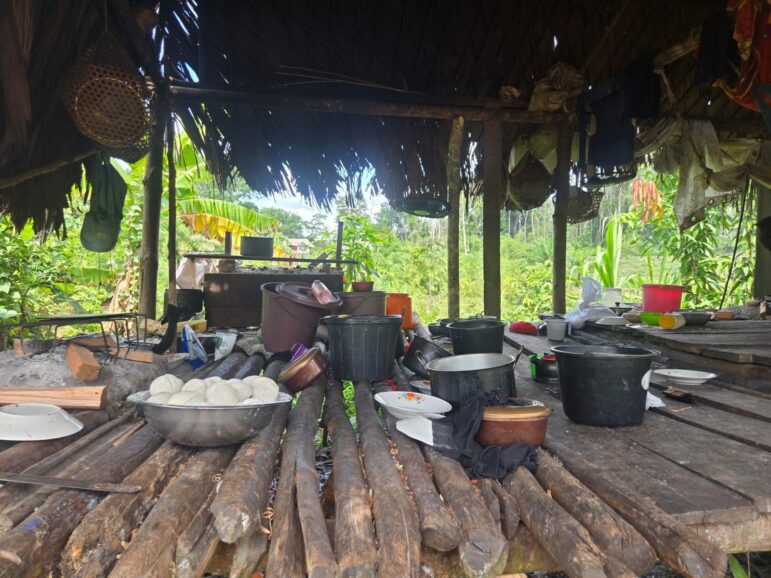
When CIJN attempted to interview them, Johnson pointed out that they only speak Warao and Spanish. Through Johnson, one of the women said she was “comfortable” living in Imbotero but she misses some of her family who were in Venezuela, “I can’t go back, not now” she tells Johnson, “it is so bad there, no food, no food, only here I can feed my family.”
There are other Warao families living on the Barima River. One group comprises families currently residing at Smith Creek.
There, the families say they have “adjusted” to life in Guyana. “It got very difficult to live in Venezuela,” Paul tells Johnson in his native Warrao tongue. “But I heard some good news, Maduro is gone,” Paul laughs.
“I could think about going to see what is happening soon.” Paul adds that he left Venezuela five years ago. “I visited some friends there two years ago, but I don’t like to visit often.”
He says he has had to spend a lot more resources to visit Venezuela. “You have to spend on fuel, and I would have to take some ration but most times I have to give things to the military and others, you know, like gangs, so, you know, I can get a safe passage,” Paul explains.
Back in Mabaruma, we traveled for almost two hours from Kumaka Landing to a place called Khan’s Hill.
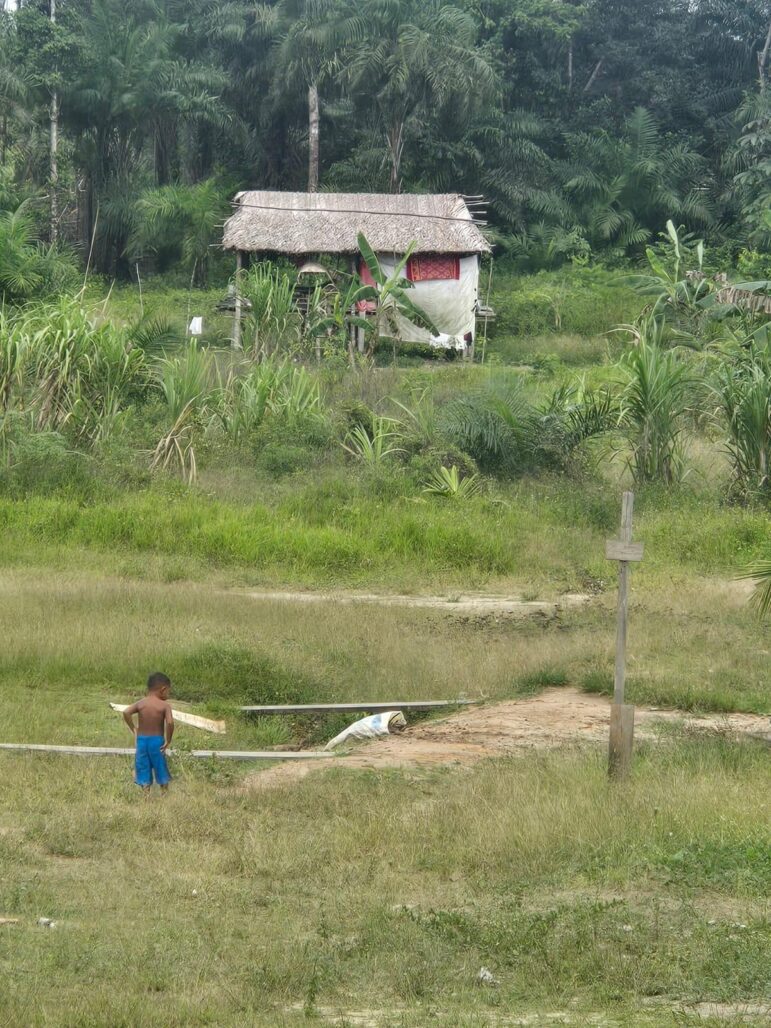
There are several Warao families living in thatched-roof homes at this location. “They all came from Venezuela years ago,’ Johnson tells CIJN.
Julio (one name given) is the leader among this group. Speaking in Warao dialect, the man says he left Venezuela about seven years ago. “It got really hard to live there,” he adds.
“I remember so much of our time there, we were happy, but all of that changed with Maduro,” Julio explains. “I blamed him for where we are, we had better living there.”
Dasilva, another elder, explained that his move came after the family began losing crops they farmed to gangs and the military. “It was a hard time, if we had something the men came and take it away, the food, the medicine everything,” he said.
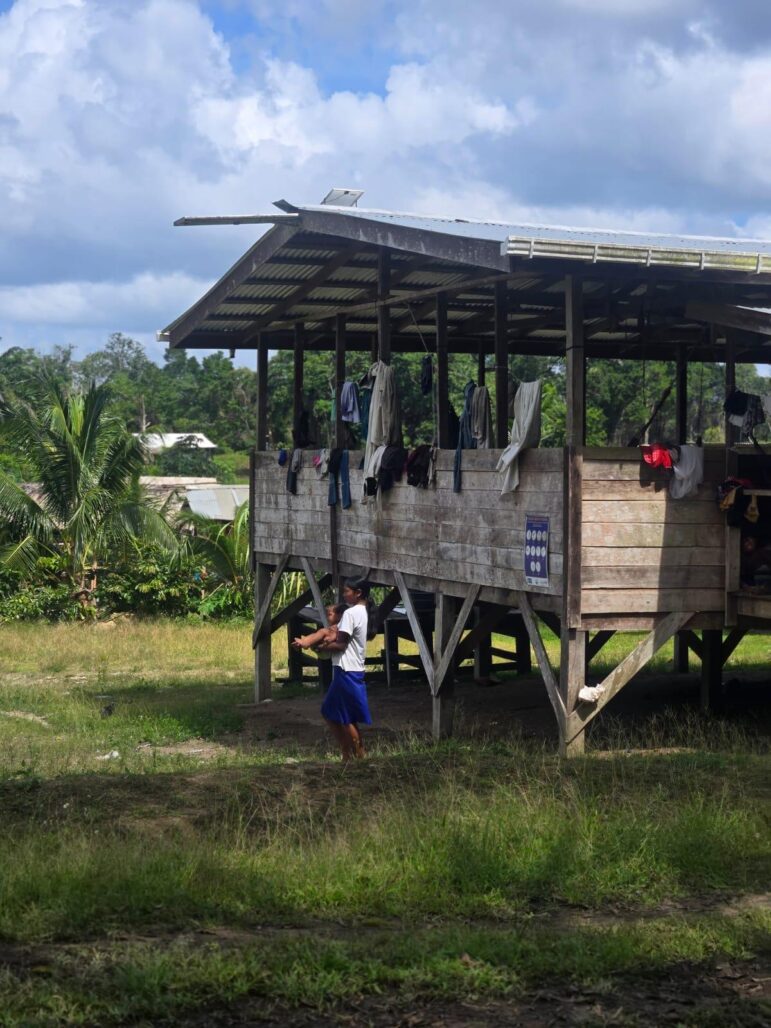
Living at Khan’s Hill has been described as different by many of the families. Johnson said the Warao people are known for living on the water or close to waterways. “They are known as the water people, they live in their boats and make their homes on the rivers.”
Here, they are inland and far away from any waterway. But there are signs that they have made Khan’s Hill their home. At least one permanent extended wooden living quarter has been constructed. This houses several families including a newborn baby sighted by CIJN.
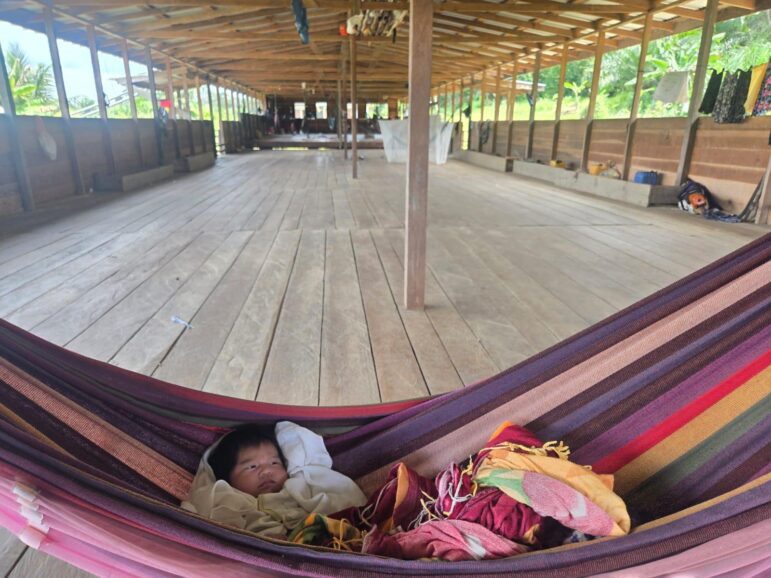
In the settlement, many of the structures are not enclosed – with no doors or walls. They are constructed using bamboo and lumber from the area and all have thatched roofs.
Water is collected in black plastic tanks donated by various groups and the government. Chickens and dogs run around the settlement, and some gardens could be seen around the settlement.
The families consume fish and buy small amounts of rice and sugar. Many of the children are not in school. Language also remains a significant barrier.
Johnson explained “they speak only Warao and Spanish, so it is hard for the children to be enrolled.” A few children benefited from limited classes held in the settlement by a volunteer. The women are occupied with caring for the children and chores that include cooking and washing.
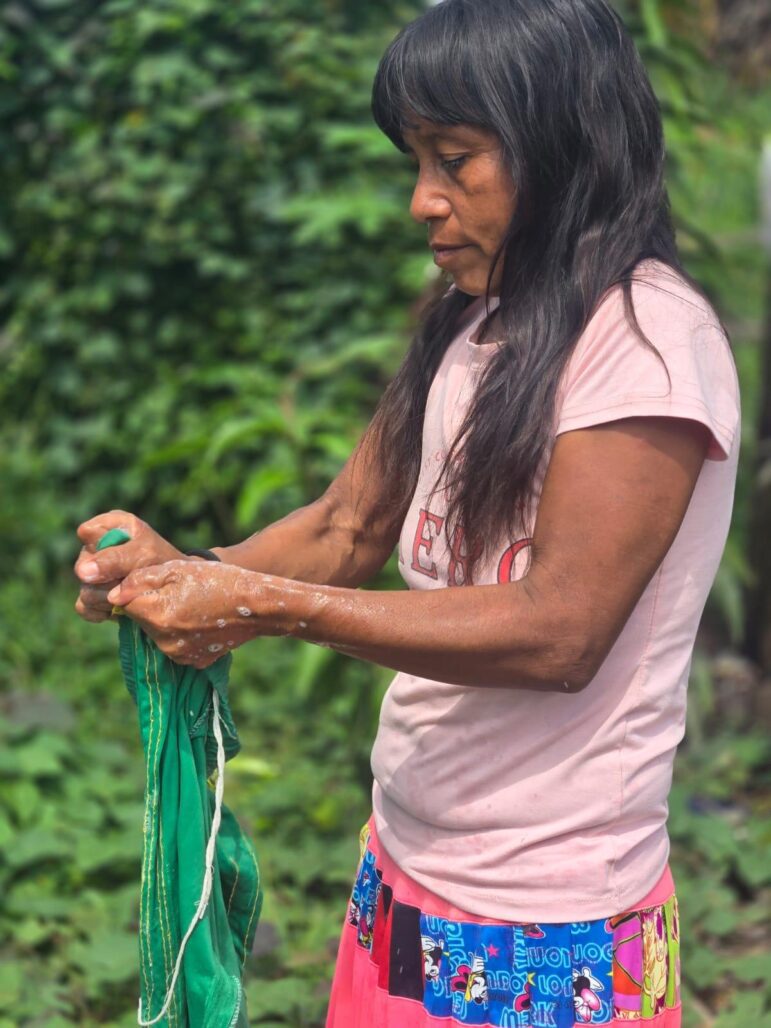
Dasilva said many of the men would seek employment in nearby farms, but employment is not always guaranteed. Even without employment, Dasilva feels that he is still comfortable calling Khan’s Hill his home. “Nothing will change in Venezuela, I am not going back, I feel safe here,” he declared.
Vybert Vazrov is one of the medics that visit the settlement to provide treatment. Vazrov explained that many of the families are nomadic.
“I may treat some today here, but I move to another location, and I see the same people next week,” he explained.
Vazrov added that many of the people are treated for common illnesses and can range from cough and colds to malaria. “Many of them live in swampy areas and some live in areas that we classify as the border,” Vazrov said. “It is very problematic to classify them as migrants since they live so close to both countries.”
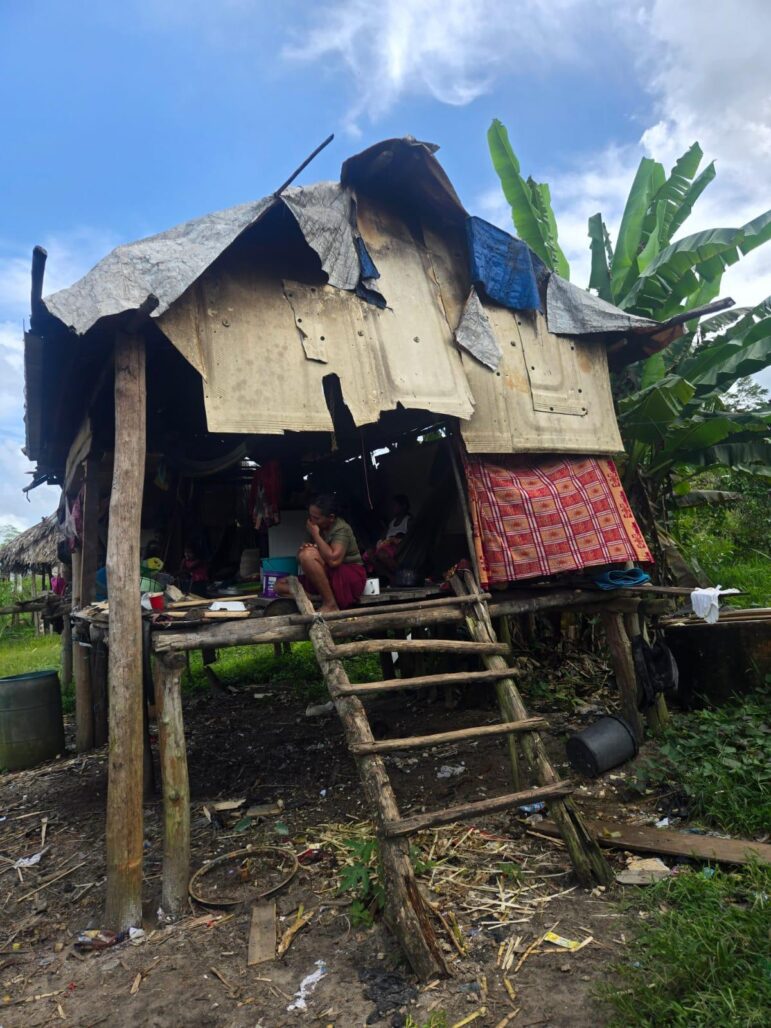
Border life under such circumstances is both arduous and unpredictable. Access to basic services takes time and living conditions remain a challenge. But, to many, it remains a safe haven. Julio sees himself and his family remaining at Khan’s Hill. “This is home now,” he says. “I miss river life but this home.” He is not alone either in arriving at such a conclusion or in predicting what the future holds.