On a quiet night about 25 years ago, Ann stepped out of a work event in St Michael and into a darkness that would alter the rest of her life. The Barbados journalist, who asked to be identified by a pseudonym to protect her privacy, was robbed and raped at gunpoint while waiting for a ride in a poorly lit area. The trauma has never loosened its grip. Now, every time she leaves home, safety frames her decisions. “All of my plans are based on ensuring my personal safety,” she said.
Barbados
Is Barbados Keeping Cruise Tourism and Marine Protection on an Even Keel?
|
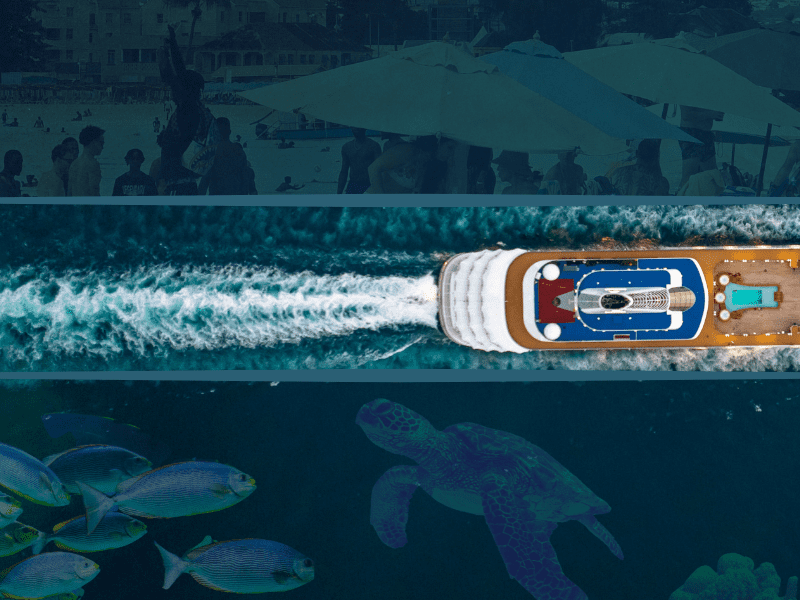
Cruise passengers wait anxiously to disembark. When the doors finally open, they scurry down the gangway into waiting taxis and buses, eager to see what Barbados has to offer.
The most coveted destination is the beach, where the dreams of some vacationers come true as they experience “advertised” paradise. This paradise is part of the larger marine space, which Barbados agreed to protect as a signatory to the United Nations’ Convention on Biological Diversity and later, the Kunming–Montreal Global Biodiversity Framework (GBF) in December 2022. The framework outlines 23 target action goals, with Target 3 focusing on 30% marine protection by 2030.
Cementing its dedication to the 30×30 goal, Barbados entered into a debt-for-nature swap, legally tying its financial recovery to its environmental commitment.
Despite these highly visible international stances and the Marine Areas (Preservation and Enhancement) Act, Cap 392; the Coastal Zone Management Act, Cap 394; and the Marine Pollution Control Act, Cap 392A Acts, Barbados protects less than 1% of its marine space through its sole legally designated Marine Protected Area, the Barbados Marine Reserve. This reserve, located at Folkestone on the west coast, is protected by law and divided into four zones for research, recreation, and water sports.
The Barbados Marine Reserve, located on the west coast, and Carlisle Bay Marine Park on the south coast, together account for less than 1% of the island’s marine space under official protection.
Ripple Effect: A Comparative Study of Male Suicide in Trinidad and Tobago, Barbados, and Guyana – Part I
|
When he was asked what was being done to address male suicide in Trinidad and Tobago, the Minister of Health, Terrence Deyalsingh, said that recently the health ministry had signed a Memorandum of Understanding with the University of the West Indies (UWI) and UNICEF to establish a mental health chatline dedicated only to adolescents and youth. For those in their 30s, and 60 years and over, the national suicidal hotline among other resources would be there to assist. But for 24-year-old, Charran Prem Tom, who’d sought out mental health assistance, it had proven not enough. One of his close friends, Michael (who did not provide his last name), said Charran was depressed for a long time, yet had a smile and laughter capable of lighting up entire rooms. Charran worked as an AC technician and enjoyed going to the gym. Nine years ago in secondary school, Michael met Charran in Form 4 where they became good friends not long after.