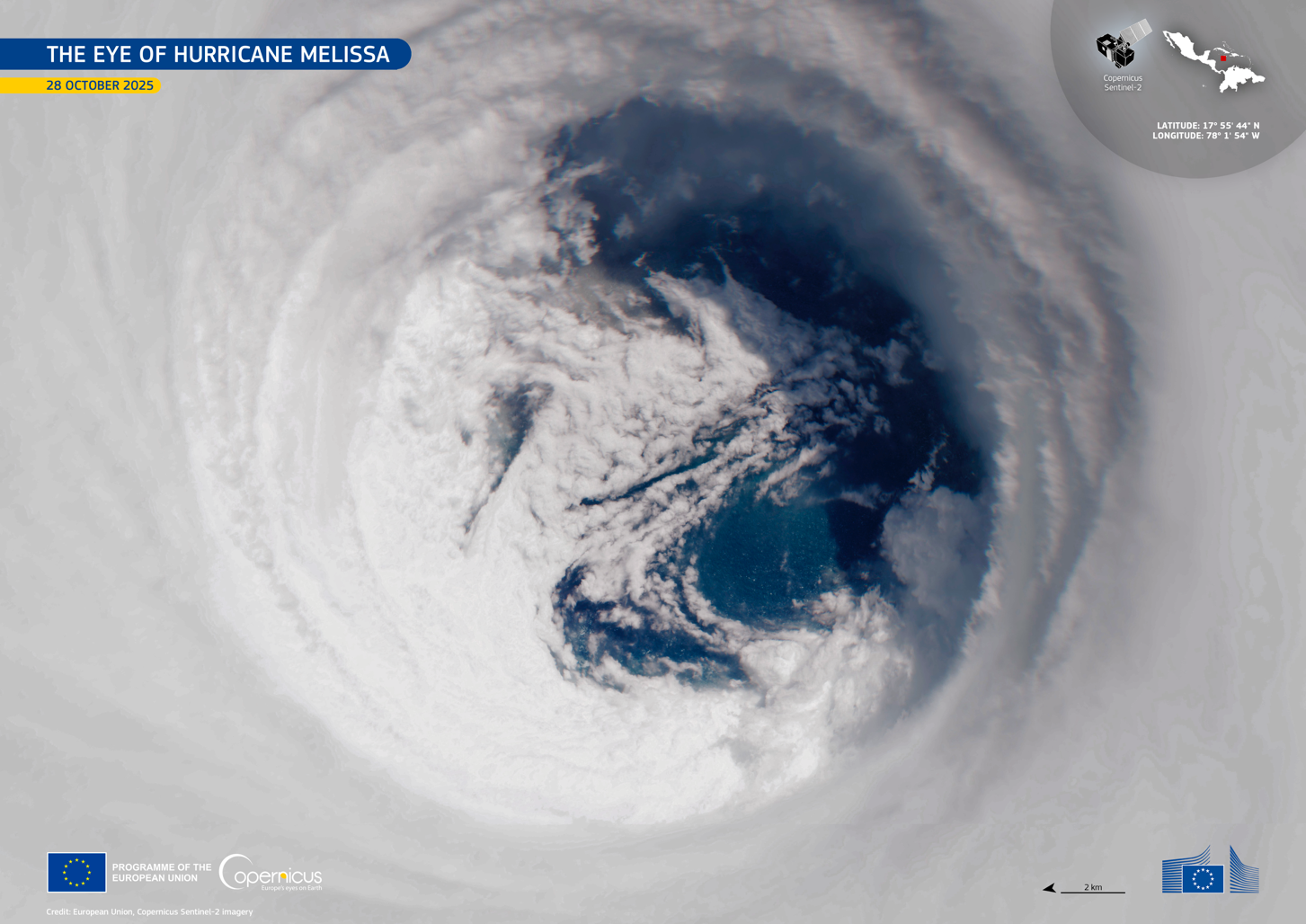
As the sun rises each morning over the battered coasts and battered communities, the scars left by Hurricane Melissa are everywhere. For miles all that can be seen are toppled power lines, damaged homes, and families struggling to regain a sense of normalcy. Yet, across the most-affected regions, a story of remarkable resilience and determination is unfolding.
Hurricane Melissa struck Jamaica on October 28, 2025, as a Category 5 storm and it left a trail of destruction across vast stretches of the island, plunging entire communities into darkness and disrupting lives overnight. Torrential rains and hurricane-force winds devastated critical infrastructure and forced emergency officials into round-the-clock action.


On the Front Lines of Recovery
In the immediate aftermath, restoration crews mobilized with impressive speed. According to the latest restoration update issued November 15, utility teams have worked tirelessly to prioritize the return of electricity and safe water to hospitals, emergency shelters, and care facilities. Neighbourhoods hardest-hit by flooding and storm surges have seen non-stop efforts to clear access roads, restore power, and ensure that the most vulnerable populations are assisted first.
Officials report that, despite logistical challenges in several rural and coastal zones, 85% of households have now had their electricity restored, with major progress in clearing blocked waterways and fortifying eroded bridges. Restoration work continues in some pockets where downed lines and debris still hamper access.
At 14th November, there were 45 confirmed deaths but as access to communities improve, this number is expected to increase. Health authorities have prioritized the provision of emergency care, with temporary medical facilities established in the most affected communities. Vector-borne diseases and waterborne illness risks are being monitored due to standing water and compromised sanitation.
Based on data up to 14th November 2025, over 100,000 people are directly affected, with at least 20,000 displaced and seeking shelter in temporary facilities. Vulnerable groups (including children, elderly and persons living with disabilities) were prioritized in relief and evacuation efforts.
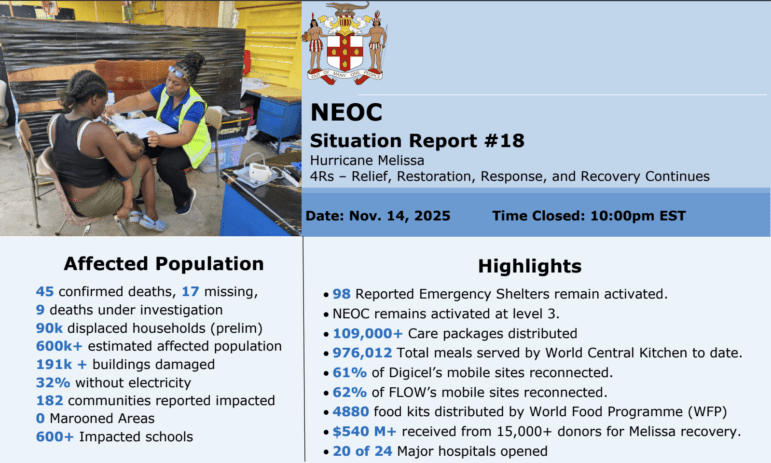
There is severe damage to road networks, communications, electricity grids, and water supply. More than 70% of the island initially lost power after landfall but there has been steady restoration noting that not all communities can be restored. Schools and hospitals sustained structural damage and some remain non-operational.
International Aid
In the wake of Hurricane Melissa’s devastation, both international and local aid have played a pivotal role in relief and recovery efforts. International agencies swiftly deployed emergency teams, with foreign governments and global organizations providing funding, technical support, and urgently needed supplies such as food, water, and medical equipment. Non-governmental organizations coordinated closely with local authorities to reach the hardest-hit and most vulnerable communities, overcoming logistical challenges presented by blocked roads and communications outages. Meanwhile, local responders including government emergency services, community organizations, and everyday citizens, have worked tirelessly to distribute relief items, operate shelters, and restore essential services. Their combined efforts underscore the importance of global solidarity and local resilience as the nation charts a path from immediate relief to long-term recovery.
Navigating Accountability and Transparency in the Wake of Disaster
Public concerns have intensified around the accountability and transparency of the use of funds and international aid following Hurricane Melissa’s devastation. Many Jamaicans have voiced fears that without rigorous oversight, much-needed resources could be misallocated or fail to reach the hardest-hit communities. In response, both government leaders and local technology firms have begun to roll out digital relief mapping platforms, such as Relief Link Jamaica, allowing donors and agencies to track every dollar, mattress, and bag of rice delivered, to restore trust in the relief process. Prime Minister Andrew Holness has also pledged strict fiscal discipline and comprehensive audit trails, insisting that both domestic and foreign contributions will be accounted for not just in terms of financial spending but by measurable results in recovery and rebuilding. As debates continue, civil society groups and international partners are pressing for greater public access to aid data, efficient distribution, and targeted support for Jamaica’s most vulnerable, ensuring that support fulfills its promise of building the country back stronger and more resilient than before.
However, the need for robust transparency around international aid and disaster recovery has spotlighted crucial issues with Jamaica’s Access to Information (ATI) Act. While the ATI Act is meant to empower citizens, journalists, and civil society to scrutinize government actions and follow the flow of funds, several challenges have emerged in this crisis. The surge of incoming aid and rapid establishment of new agencies, such as the National Reconstruction and Resilience Authority (NARA), has raised concerns about whether standard ATI procedures are being upheld for these entities tasked with urgent reconstruction. Critics argue that ATI requests can be delayed or denied on grounds of “national security” or “public interest,” particularly in emergency contexts, limiting timely access to contracts, spending reports, and procurement decisions. Civil society advocates are calling for enhancements to the ATI regime, urging designated transparency protocols and real-time data publication for all disaster recovery operations, to ensure that accountability is not sacrificed for speed during Jamaica’s largest rebuilding effort in modern history.
Economic Impact
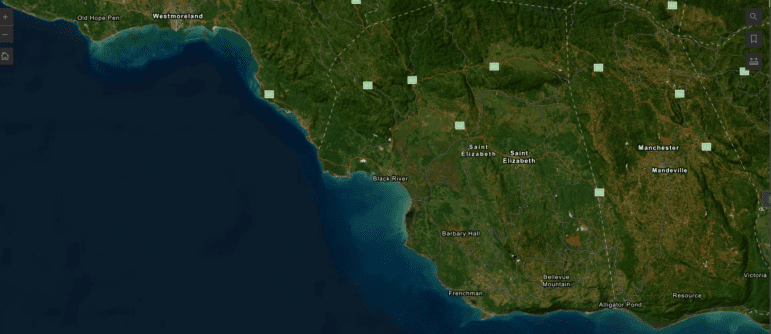
A recent World Bank-led Global Rapid Post-Disaster Damage Estimation (GRADE) report now puts the cost at a staggering US$8.75 billion which is 41% of Jamaica’s GDP. Ground zero for the devastation was the island’s breadbasket: parishes including St. Elizabeth, St. James, and Westmoreland bore the brunt, with St. Elizabeth alone accounting for more than US$2 billion in damages. As the winds tore off rooftops and uprooted lives, over 116,000 homes were left in tatters.
The numbers are grim with approximately 30,000 Jamaicans forced from their homes at the storm’s peak and to date, thousands remain in emergency shelters. The agricultural sector, already battling the aftershocks of Hurricane Beryl in 2024, faces a new existential threat. An estimated 41,000 hectares of crops were wiped out, with over a million animals lost. “This is a food security crisis,” warn rural leaders, as markets across Jamaica see prices surge and families struggle to source daily meals.
Tourism, the linchpin of Jamaica’s economy, has not been spared. Popular resorts and hotels along the island’s famed north and west coasts stand battered just as the lucrative winter season approaches. For thousands whose livelihoods depend on visitors, the road to recovery appears daunting.
Jamaica’s catastrophe bond, triggered for US$150 million, brought some relief. But the shortfall is staggering, and international partners warn that the island’s risk profile is only worsening as climate change fuels storm frequency and severity.
Looking Ahead: Rebuilding Stronger
Against the odds, stories of solidarity and resolve are everywhere. Communities have rallied to clear debris, share food, and support the elderly. Authorities emphasize that recovery is not just about restoring what was lost, but building back stronger communities better prepared for future storms. The current state underscores plans for infrastructure improvements, enhanced disaster communication, and community training sessions in the coming months.
As the island moves forward, the story of Hurricane Melissa is shifting from one of catastrophe to one of collective courage and a shared commitment to long-term recovery.